

 Culture
How Muslims have shaped American books, journalism, and film
Five routes through American storytelling: children’s books, superhero comics, independent publishing, national journalism, and Detroit filmmaking.
Reporting, newsroom leadership, and mentorship explain Amna Nawaz’s contribution beyond the milestone of becoming a PBS NewsHour co-anchor.
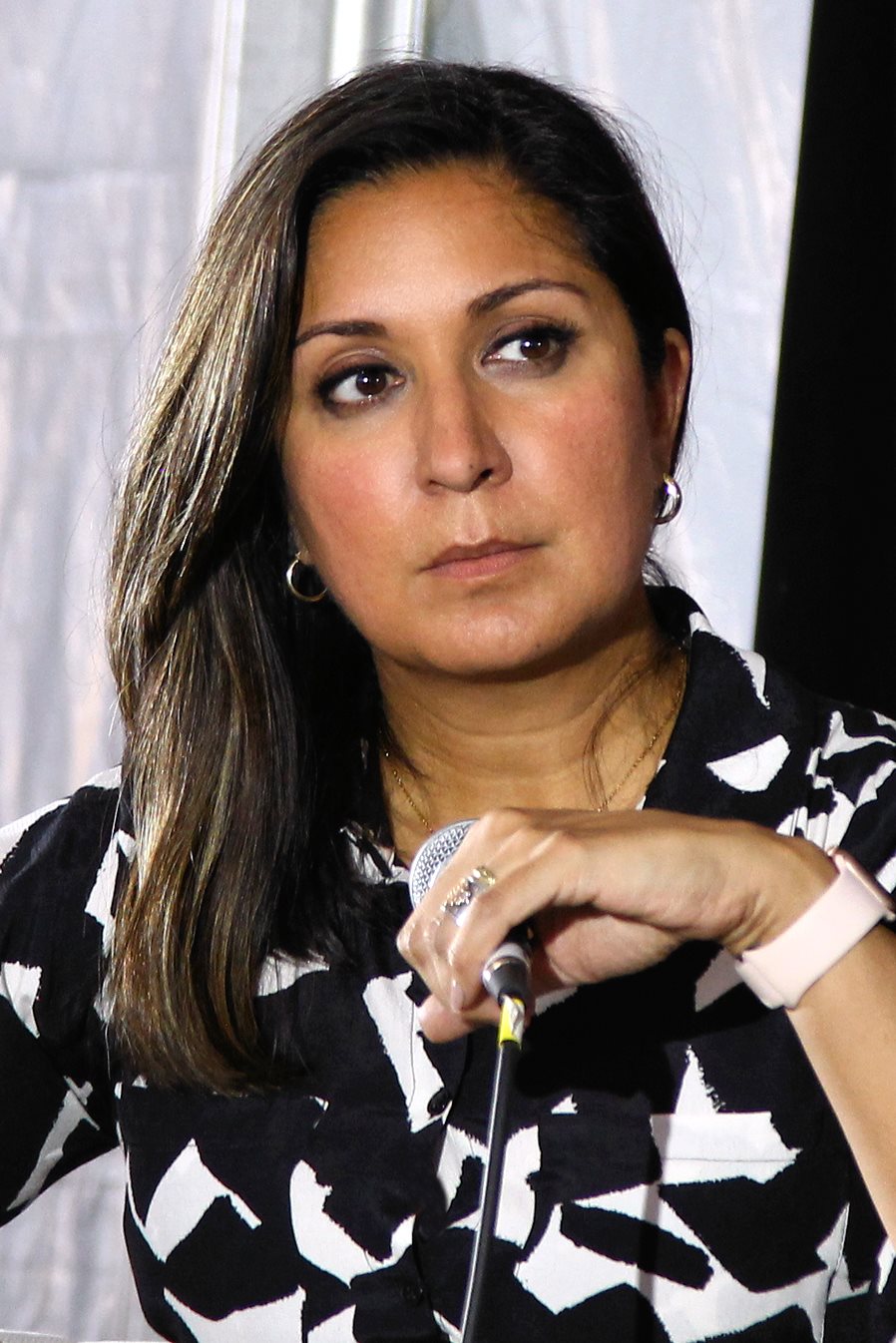
When Amna Nawaz became a PBS NewsHour co-anchor in January 2023, coverage understandably emphasized a milestone: a Muslim American woman was taking a leading seat at a national evening news program. But a milestone is an opening to a professional history, not a substitute for one. Her contribution includes field reporting, the development of a reporting platform, and decisions about who gets an opportunity to report.
A 2022 interview originally published by The 19th and republished by WFAE identifies Nawaz as a Muslim and the daughter of immigrants from Pakistan. In that conversation she describes the distance between the jobs she could see women like herself doing early in her career and the role she was about to take. Her identity is part of her own public account, not an assumption based on a name or appearance.
The University of Michigan's Wallace House biography traces work at ABC and NBC before PBS. It includes foreign reporting from Pakistan, Afghanistan, Syria, and Turkey, as well as coverage of American politics. Nawaz also founded and served as managing editor of NBC's Asian America platform. The biography records her role co-moderating the December 2019 PBS NewsHour/Politico Democratic presidential primary debate.
These are different kinds of journalistic work. A correspondent gathers and tests information; an editor helps decide which stories receive time and resources; a moderator must make questions usable in a shared public setting. An anchor brings reporting into a program audiences can follow. No single role captures the entire practice, and the visible person at the desk is supported by producers, camera crews, researchers, editors, and other reporters.
That distinction matters when describing a benefit to American public life. The contribution is not that a journalist's identity guarantees accuracy. It is the work of asking questions, gathering evidence, and making information available, alongside a broader range of experience in the room where editorial choices are made.
The Asian American Journalists Association's 2023 President's Award account dates the launch of NBC Asian America to 2014. It describes the platform as an effort to elevate stories from a diverse population. This gives a concrete example of institution-building: creating a place where a set of stories can be pursued repeatedly rather than appearing only when a crisis demands attention.
A platform's existence does not tell us that every story was comprehensive or that all Asian Americans agreed with its choices. It does make a particular question visible. Who has an assigned beat, a commissioning editor, and a continuing place in the publication? Those resources influence which experiences become available to a general audience.
For a reader, the practical response is to look beyond the label. Compare a feature, an investigation, and a breaking-news report. Notice whose knowledge is treated as expertise and whose experience is included only as reaction. The question is useful across news organizations, including those whose coverage a reader generally likes.
AAJA's award account identifies Nawaz's work on the January 6 attack, global plastic pollution, and the NewsHour team's coverage of gun violence, including reporting in Uvalde, Texas. It also notes her hosting of Beyond the Canvas, a PBS series about artists and creators. These examples show the breadth of a career without requiring a claim that one reporter transformed all the subjects she covered.
The team attribution is important. A newsroom award is not automatically an individual award for every participant, and an individual profile should not absorb the labor of an entire production. A careful reader can follow the cited work and look at its credits, reporting methods, and context. Recognition points toward work worth examining; it does not remove the need to assess it.
In The 19th interview, Nawaz distinguishes encouragement from actually giving a colleague a chance to demonstrate ability. She also discusses the importance of considering people whose questions are absent from the room. These are her stated professional priorities, rather than a measured claim about the effects of every hiring or editorial decision she has made.
The distinction is useful for anyone starting a career. Mentorship can explain how a job works. Sponsorship can mean recommending someone for an assignment or trusting them with responsibility. An institution needs both advice and opportunities if new people are to build a record of work. The subject here is a newsroom, but the question is relevant to publishing, filmmaking, and arts organizations as well.
To study Nawaz's contribution, choose an interview or reported segment and examine its structure. Which fact establishes the stakes? What follow-up is asked when an answer is incomplete? Does the audience learn the difference between an allegation, an observation, and a confirmed fact? These are more useful measures than agreeing with the interviewee or admiring a presenter's confidence.
Muslim American participation in journalism belongs in a history of American storytelling, while remaining distinct from fiction. Qasim Basir's films create dramatic worlds; reporting is accountable to events outside the story. Hena Khan's books help readers encounter imagined lives. Nawaz's work offers another contribution: making public questions available for examination, with a career that includes both telling stories and creating places for others to tell them.
CultureFive routes through American storytelling: children’s books, superhero comics, independent publishing, national journalism, and Detroit filmmaking.
From Mooz-lum to To Live and Die and Live, Qasim Basir brings family conflict, grief, and the city of Detroit into American independent cinema.
CultureFrom Amina’s Voice to basketball comics, Hena Khan gives young American readers Muslim characters with interests, choices, and everyday lives.