
 Culture
How Muslims have shaped American books, journalism, and film
Five routes through American storytelling: children’s books, superhero comics, independent publishing, national journalism, and Detroit filmmaking.
From Amina’s Voice to basketball comics, Hena Khan gives young American readers Muslim characters with interests, choices, and everyday lives.
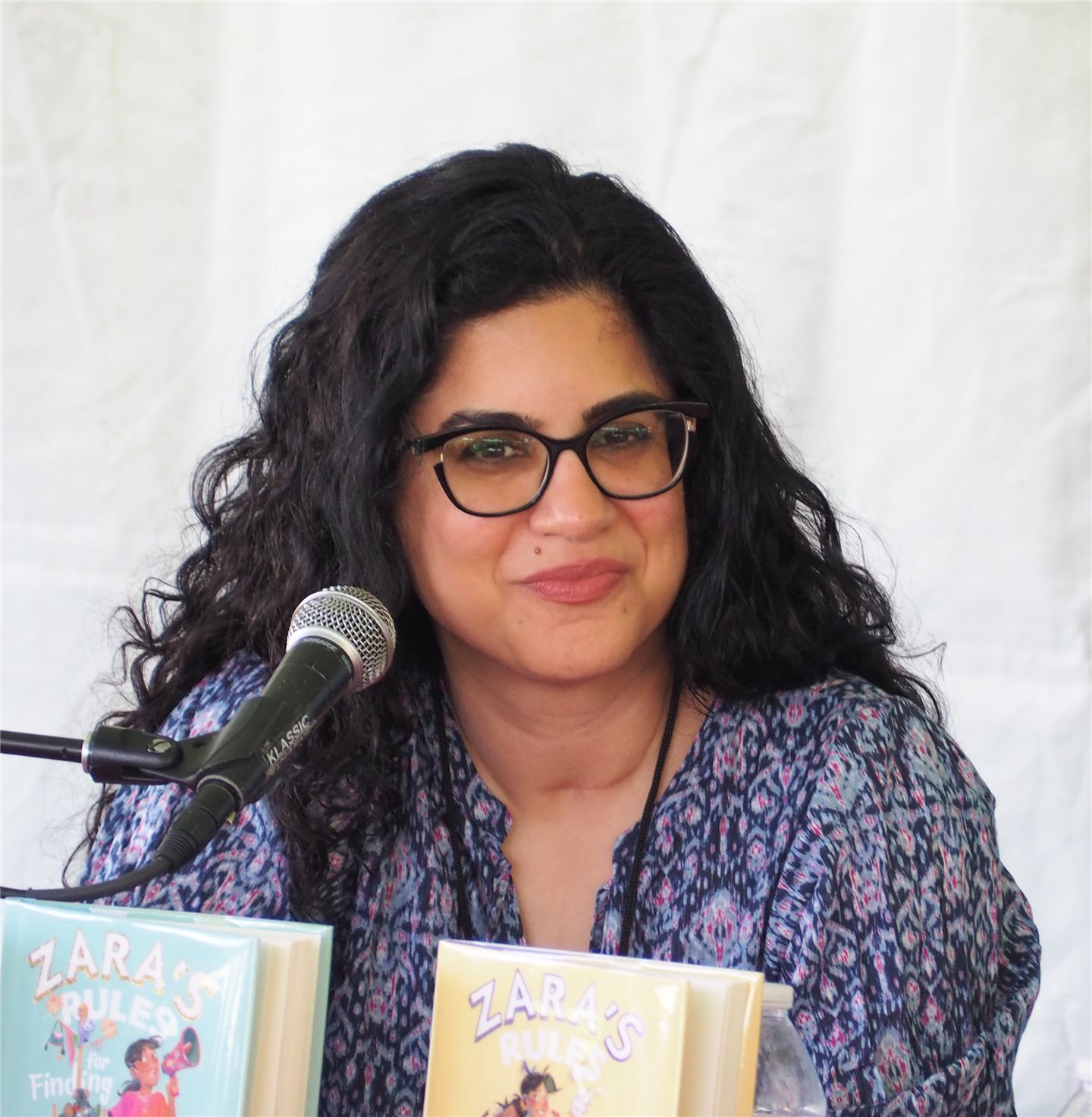
A child can want to make the team, find the courage to sing, or protect a friendship without having to explain an entire religion first. That is an important starting point for reading Hena Khan. Her characters have specific families and cultural backgrounds, but they also have things to do. In American children's publishing, making room for that combination is a contribution worth examining at the level of the story.
Khan identifies herself as Pakistani American and Muslim in her official biography. Raised in Rockville, Maryland, she remembers spending time in public libraries without finding her own life represented in their books. She later worked as a writer and editor for nonprofit health organizations and began writing for Scholastic Book Clubs. Her career includes picture books, middle-grade fiction, interactive adventures, and graphic novels. That range matters: there is more than one doorway into a reading life.
In a 2024 Publishers Weekly interview, Khan explained that heritage and faith are part of her characters' lives rather than problems they must invariably overcome. She discussed artistic confidence in Drawing Deena, including the effects of outside opinions and the character's experience of anxiety. Her account gives a useful test for children's fiction: what does the protagonist want, and what makes getting it difficult?
Ask that question before asking what a book represents. If every discussion begins with an author's demographic category, the work risks becoming a teaching aid before anyone has enjoyed its sentences, humor, or suspense. A young reader might connect with nervousness about being judged and only later notice a different household custom. Another reader may recognize the household immediately and become interested in a dilemma unlike their own. Both are valuable ways into fiction.
This does not mean background is interchangeable. A story becomes less interesting when its setting could be swapped out without changing anything. The challenge is to let particularity influence a character without forcing it to explain every decision. Khan's stated approach offers an alternative to the expectation that every Muslim protagonist must begin by rejecting or defending Muslim identity.
We Are Big Time, written by Khan and illustrated by Safiya Zerrougui, appeared in 2024. The publisher's description introduces Aliya, who moves from Florida to Wisconsin and joins a girls' basketball team at an Islamic school. The fictional team gives the story a concrete shared task. Winning matters to its players, but so do confidence and the work of becoming teammates.
The illustrator belongs in any account of that contribution. Comics depend on the relationship between successive images: the space a player crosses, the pause before an answer, the direction a reader's eye travels. Writing a script and drawing a page are connected but different acts. Calling this simply a book by Khan would leave out the person responsible for making its movement and expressions visible.
For a reading group, compare one sports sequence with a conversation away from the court. Count how many panels each uses. Notice where speech stops and an expression carries the meaning. This is an exercise in reading the actual book, not a request for a child to speak for a community. Readers can disagree about a character's decision while still seeing how the page makes that decision understandable.
Khan's biography lists Amina's Voice, its sequel Amina's Song, and More to the Story among her novels. It identifies Little Women as an inspiration for More to the Story. That connection is a particularly useful invitation for libraries: American literary inheritance can be revisited through a different family rather than treated as a closed shelf.
A comparison should not become a hunt for identical plot points. Readers could instead ask how sibling relationships create pressure, how ambition affects a household, or how one character's account differs from another's. Adaptation and influence give a writer a structure to test. They do not require a new book to stand in for the old one, or the old one to function as an authority on the new.
The practical contribution is a body of books that librarians, teachers, families, and young readers can choose for different purposes. A graphic novel may suit someone interested in sports or visual storytelling. A middle-grade novel can support a longer discussion of friendships and changing confidence. A picture book asks different things of the reader and the person reading aloud.
Choose by the reader and the work, rather than by a demand to find one definitive Muslim book. Check the edition, illustrator, intended age range, and a sample before making a selection. Let children describe what they noticed before supplying a lesson. An author visit or reading discussion should also leave room for questions about drafting, revision, humor, and collaboration.
For another approach to character and comics, read about G. Willow Wilson and the team behind Kamala Khan. For the institution-building side of publishing, Daybreak Press shows why making books available requires editorial work as well as an author's idea. Together these stories reveal several ways Muslim Americans participate in the country's reading culture.
CultureFive routes through American storytelling: children’s books, superhero comics, independent publishing, national journalism, and Detroit filmmaking.
 Culture
How G. Willow Wilson and her collaborators made room for a Jersey City teenager in mainstream superhero comics.
Explore Rabata's publishing project through its catalog, editorial team, and manuscript guidelines.