 Shop
Buying Ceramic Art with a Clear Understanding of the Work
Questions about process, purpose, makers, and presentation to ask when buying ceramic art at a market or online.
Prepare a clear brief for a calligrapher, from verified wording and script preferences to framing and delivery.
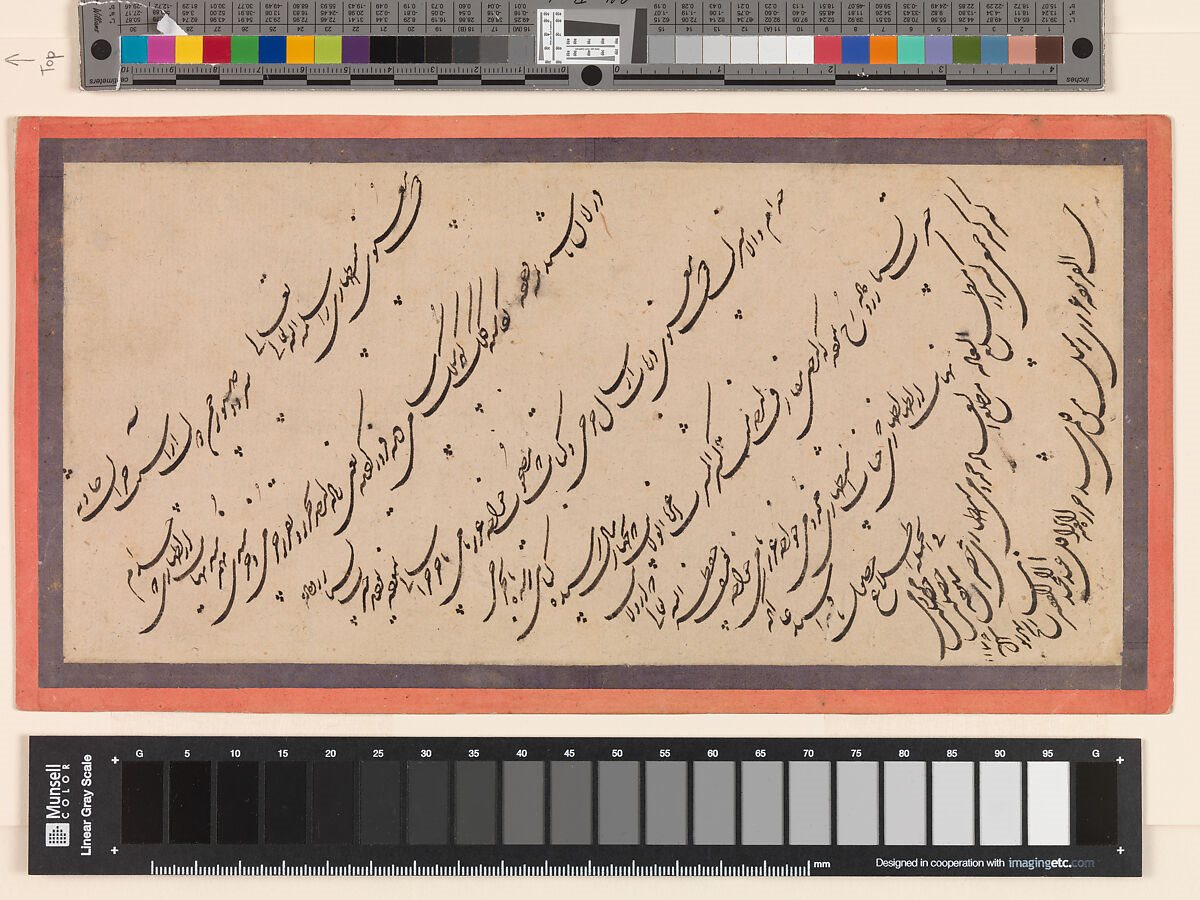
A successful calligraphy commission begins with the words and the place where the work will live. A family name, a line of poetry, or another carefully chosen text gives the artist a starting point. Wall dimensions, viewing distance, and the desired format help turn that text into a workable brief.
This guide uses published commissioning information from calligrapher Josh Berer as a concrete example. His policies describe his own practice. Other artists set their own terms, and a buyer should read the current agreement for the person they choose.
Berer’s custom-work page groups examples by script, including Kufic, Naskh, Thuluth, and Talik/Nastaliq. It also shows presentation options such as an unmounted sheet and a marbled border. Comparing a few examples is more useful than requesting an undefined “traditional” look. Custom work
Save two or three examples from the artist’s own portfolio and explain which features interest you. You might prefer the spacing, the relationship between large and small letters, or the amount of open paper. Ask the artist which approach suits the length and language of your text.
A portfolio demonstrates a visual practice. It does not establish a maker’s religious identity, and commissioning Arabic-script work does not require making assumptions about that identity. Focus your inquiry on the work and the artist’s stated experience.
Provide the exact text in its original script, along with a translation for context. If a name has several spellings, identify the intended spelling. If the text comes from a published source, include the source and passage so the artist understands what you mean.
Have the wording checked by someone competent in the language. Berer’s published terms place responsibility on the client to verify a translation independently. That is a specific example of why text approval belongs early in the process. Terms
Keep a final approved text file. When you approve a proof, compare it with that file rather than relying on memory. If you are unable to read the script, arrange that comparison with a qualified reader.
State the approximate finished dimensions and whether the size includes a border or mount. Explain whether you want an original work on paper, a digital design, or another format. Ask what will arrive physically and what files, if any, are included.
For a wall piece, measure the available space and consider the surrounding furniture. A photograph of the room can help communicate scale, provided you are comfortable sharing it. Give the artist the dimensions as well, because a photograph alone can distort proportions.
Confirm whether framing is included. If you will arrange framing yourself, ask for handling recommendations and the artwork’s exact size. A deadline should include the time needed for finishing, shipping, and any local framing.
Ask how the artist handles an initial concept, revisions, and changes to the wording after work begins. Make the decision process clear before commissioning. A request for several entirely different scripts may involve substantially different work.
Berer’s published terms distinguish ordinary personal commissions from commercial uses, and his commercial-work page separately addresses branding and product-related design. If you want the same image on invitations, packaging, merchandise, or a business logo, describe that intended use at the outset and get the applicable permission in writing. Commercial work
Keep the payment schedule, delivery arrangement, and approved scope together. This is practical project organization rather than a substitute for the artist’s agreement.
A Smithsonian interview with Berer offers background on training and the continued practice of Arabic calligraphy. Read it as a dated account of one artist’s work, rather than using any historical estimate of practitioner numbers as a current statistic. Interview
When the work arrives, keep its title, maker, date, medium, and commissioning correspondence. Those details form its provenance within your household. If it is a gift, include a small note with the translation and artist’s name.
The most useful brief is usually short and precise. Exact wording, a few portfolio references, dimensions, intended use, and a realistic deadline give the artist the information needed to propose a piece that belongs in your home.
ShopQuestions about process, purpose, makers, and presentation to ask when buying ceramic art at a market or online.
ShopFind a documented museum image, check its reuse status, and prepare a print that preserves the artwork’s identity.
 Shop
Use the Tatreez Institute’s publications and teaching resources to choose an entry point into Palestinian embroidery.