
 Art
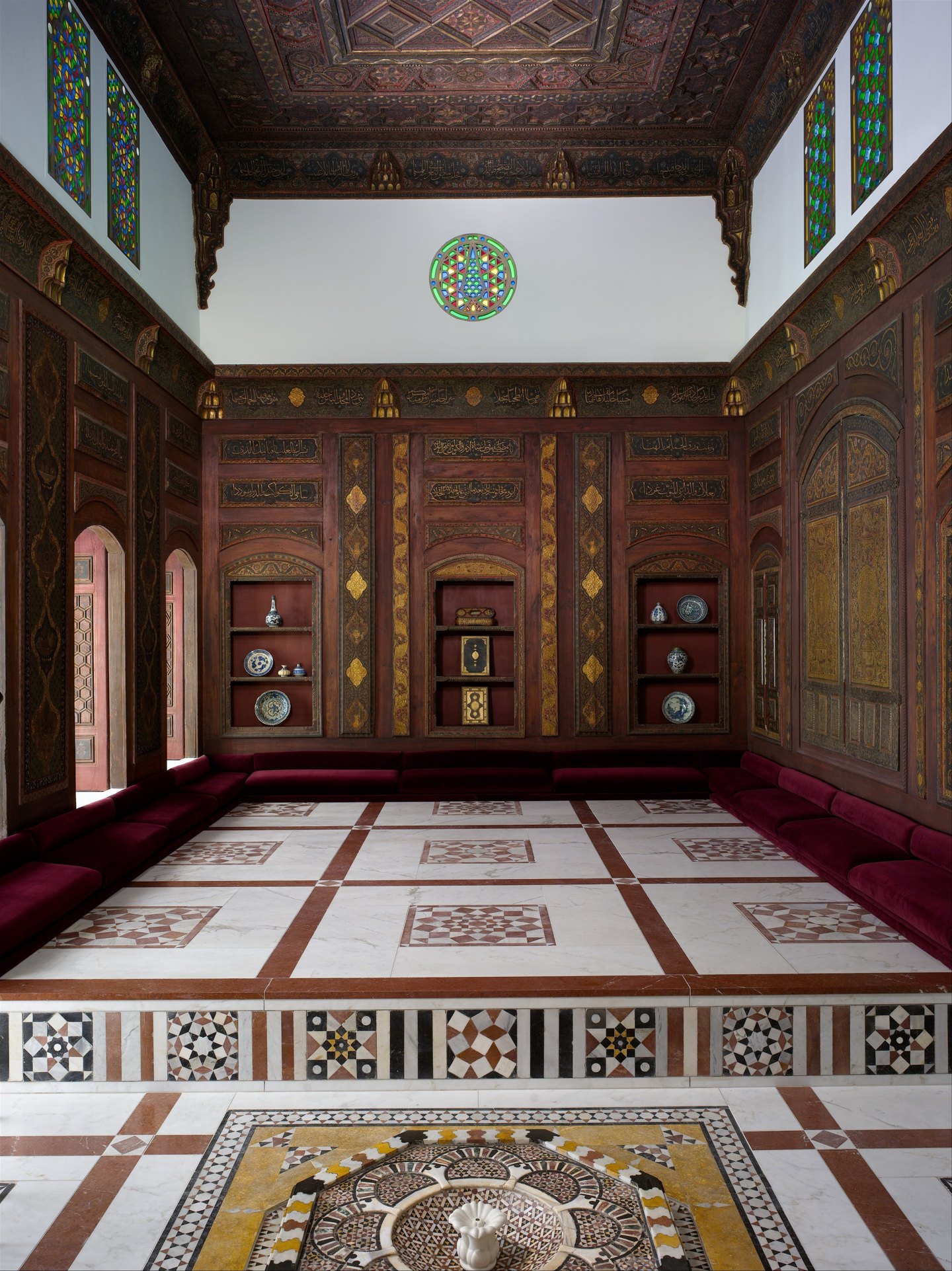
A First Visit to Islamic Art at The Met
A first-visit route through the Damascus Room, Moroccan court, and Garden Gathering, with admission and accessible-entry information.
Use the Tatreez Institute’s publications and teaching resources to choose an entry point into Palestinian embroidery.
An embroidery book can offer a pattern, a technique, a family history, or an account of a garment’s place in a community. Choosing a tatreez resource becomes easier when you decide which of those questions you want to begin with.
The Tatreez Institute, also known as Tatreez & Tea, was founded by Wafa Ghnaim in 2016 to document and teach Palestinian embroidery, dress, and history in the United States. Its account connects the work to her mother, Feryal Abbasi-Ghnaim, and to oral history, family albums, patterns, and other records. Institute background
Palestinian embroidery belongs to a specific cultural history shared across communities. A Muslim American guide can introduce it without assigning one religious identity to every maker, wearer, or reader.
If you want an introduction grounded in family memory, read the description of Tatreez & Tea: Embroidery and Storytelling in the Palestinian Diaspora. The publisher presents it as both a record of embroidery and an account of stories within the author’s family. That combination helps explain why a pattern may carry meaning beyond its visual shape. Book description
If your interest is in garments, collecting, and the diaspora, examine THOBNA: Reclaiming Palestinian Dresses in the Diaspora. The publication’s description focuses on identifying and recovering dress histories and on embroidery produced after the 1948 Nakba. Check the current edition, format, availability, and shipping information directly before ordering. THOBNA listing
These books address related subjects from different starting points. Read the contents or sample pages where available and consider the kind of reading experience you want. A narrative-rich book and a step-by-step workbook serve different needs.
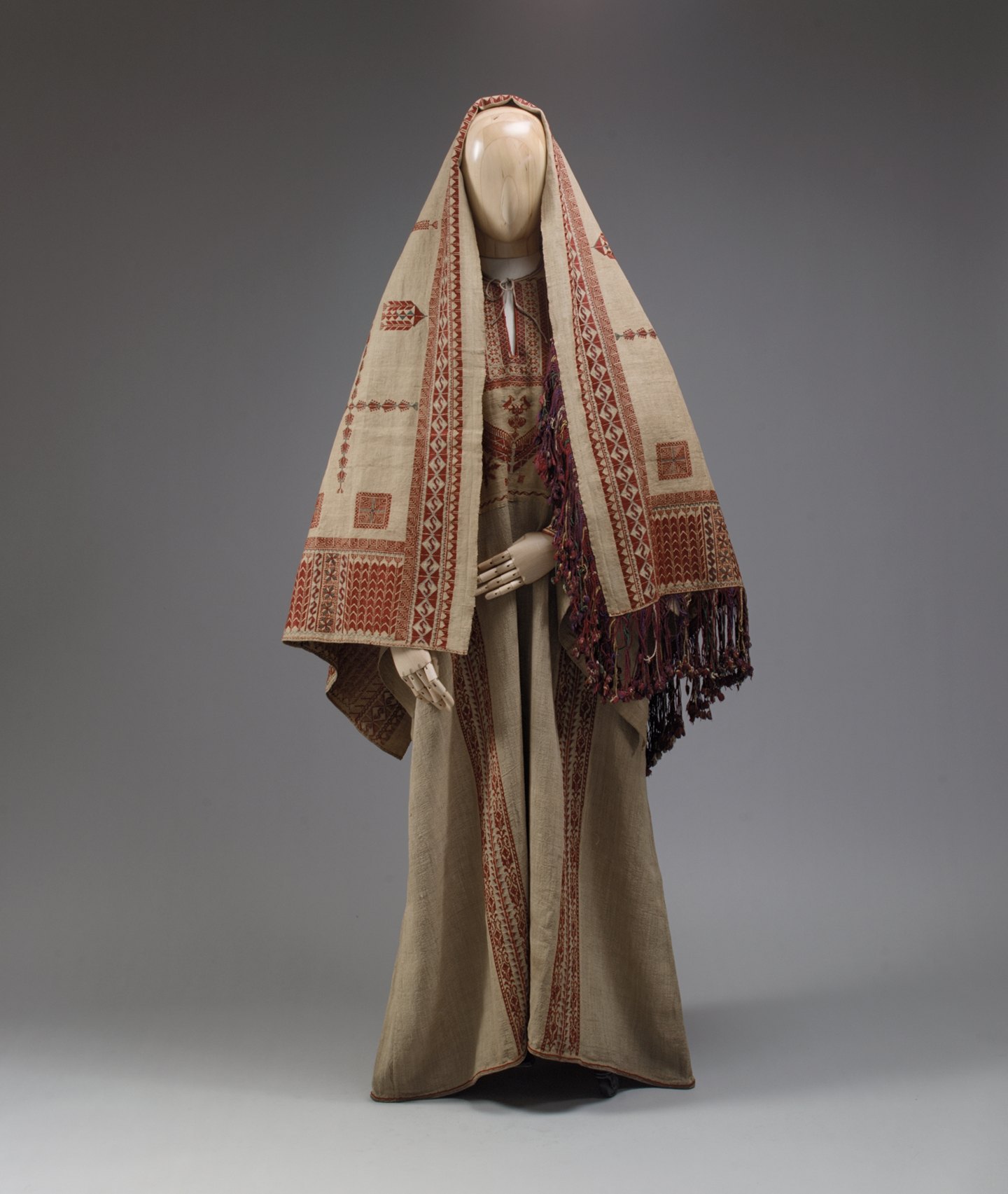
The Metropolitan Museum of Art's online record for Ensemble, object C.I.39.91.18a–c, identifies a nineteenth-century work made in Palestine: a robe, scarf and headdress in embroidered linen and cotton with metal. It entered the New York collection as a 1939 gift from Irene Lewisohn and Alice Lewisohn Crowley. The museum lists it as not on view at the time of this check, but its public-domain photograph can be studied online. Museum object record
In the photograph, compare the narrow embroidered bands on the robe with the broader borders and scattered motifs on the scarf. Notice how embroidery organizes different parts of the ensemble rather than covering every surface equally. Those visible choices offer questions to bring to a book or class; they do not establish the meaning of a motif, the wearer's religion or the maker's identity. The museum's current record says Palestine. A more precise village attribution needs its own evidence.
This is a historical collection object, not a product offered by the Tatreez Institute or a photograph from one of its classes. For a broader introduction to the New York collection, continue with our Met Islamic galleries guide.
For a first session, ask whether the course assumes any embroidery experience. Confirm what materials are included, whether preparation is required, and whether the class is live or recorded. Time zones matter for virtual instruction, especially when a course serves students in several countries.
Choose a small project that allows time to understand the stitching process. Finishing a modest sample can reveal questions about thread tension, counting, and layout that are difficult to anticipate while looking at a complete dress.
If the course includes the history of a motif, save the instructor’s name and the source they provide. Avoid treating a pattern’s meaning as identical across every period and location. A precise attribution preserves the history rather than reducing it to a decorative label.
The institute’s publications page gathers books and research on dress, embroidery, archives, and museum interpretation. Its reference list offers additional works for readers who want to compare scholarship and approaches. Publications · Reading list
A useful reading note records the author, date, place or community discussed, and the kind of evidence used. Oral history, a surviving garment, a photograph, and a printed pattern book each reveal different things. Keep those forms of evidence distinct when repeating a claim.
If a family garment is part of your own learning, document what relatives know about it before assigning a date or village from appearance alone. Record uncertainty and different recollections. A simple photograph and a careful note can preserve information that would otherwise be lost.
When purchasing a book or class, use the creator’s current official listing or an authorized retailer. Check whether a physical book, digital resource, or workshop access is being sold. For a gift, confirm whether the recipient needs supplies or an account.
For an embroidered object, ask who made it, where, and whether the decoration is hand-worked or machine-produced. The answer should guide the description and price comparison. Do not assume that a familiar motif proves a particular origin.
Keep the receipt, maker information, and any care guidance with the object. A purchase can support continuing practice while also becoming a starting point for reading, conversation, and your own careful work with a needle and thread.
The publisher's contents description is unusually useful for deciding whether THOBNA suits a beginner. Alongside discussion of ten Palestinian dresses recovered in North America, it lists diagrams for three methods of cross stitch, waste-canvas application, running stitch, and back stitch. The book includes guidance intended to account for aging hands and limited budgets. That makes technique and access part of the same buying decision.
For someone interested in design history, the listed resources include four historically organized color palettes and forty-seven pages of patterns focused on Palestinian resistance movements from the 1980s onward. The publication also includes Arabic and English terminology and a bibliography. These details describe a particular author's selection and research; they do not make the book an exhaustive map of every Palestinian textile tradition. Compare those contents with your goal before ordering. A reader wanting a regional dress history, a stitching reference, or a classroom project may find different sections most useful. Source
ArtA first-visit route through the Damascus Room, Moroccan court, and Garden Gathering, with admission and accessible-entry information.
ArtHow carpet exhibitions, collectors' gifts, manuscript acquisitions, and changing gallery installations shaped the Met's Islamic collection.