Charlotte mosques, schools, and shared neighborhood spaces
Follow documented local histories from early meeting rooms to mosques, schools, and community centers, with unresolved dates clearly identified.
Five documented ways Muslim institutions contribute to American neighborhoods through shared space, housing, civic learning, and environmental work.
Follow documented local histories from early meeting rooms to mosques, schools, and community centers, with unresolved dates clearly identified.
A close look at DREAM of Detroit’s housing rehabilitation, oral-history work, and plans for shared neighborhood infrastructure.
 Community
Find a public mosque visit, contact the host, and make space for a useful conversation.
Documented energy and water projects in American mosques, from ISNA’s ENERGY STAR partnership to incremental improvements in Milwaukee.
Youth learning, institutional education, and documented civic partnerships at New York’s Muslim Community Network.
A neighborhood contribution can be a room available for a public purpose, a house returned to use, an interview that preserves an elder's experience, or a program that helps people navigate their city. These activities rarely fit a list of celebrity achievements. They still shape what residents can do and how people understand the place they share.
This collection examines five examples of Muslim participation in everyday American community life. The focus is on named institutions and the people who make them useful. Charlotte provides a story about gathering places; Detroit brings housing and recorded memory together; New York shows the connections between a small cohort and the machinery of city government.
Together the examples offer a practical way to think about contribution: making space, sustaining relationships, developing useful skills, caring for buildings, and preserving neighborhood knowledge. The most interesting work often crosses those categories. A community building can host an election as well as a religious gathering, and a housing organization can also become a keeper of neighborhood memory.
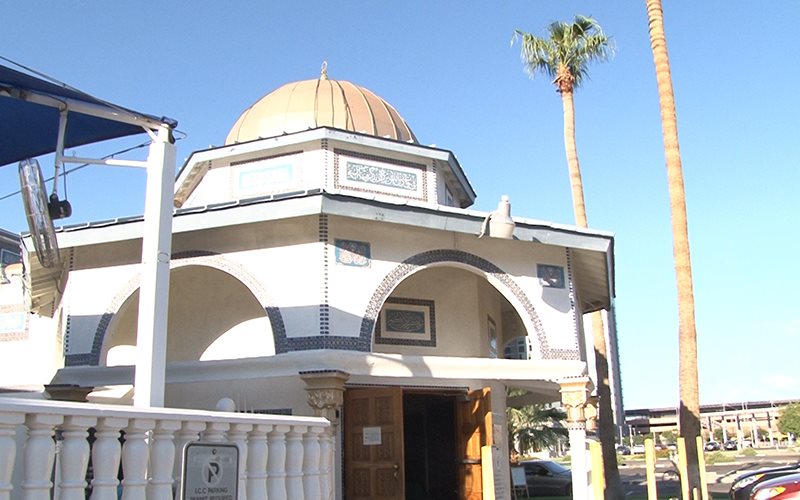
Charlotte's Muslim institutional history follows several congregations and educational spaces rather than presenting the city through a single organization. Different founding accounts, moves, and building projects reveal a history assembled over time.
The Levine Museum of the New South's account of the Islamic Center of Charlotte gives a particularly concrete example. It describes the Al-Nour facility's gym and event space, rental uses, and role as a polling location. Those functions connect a religious institution with wider civic routines. They are more informative than a general claim that a building is a community hub.
Charlotte's history includes gatherings in homes and borrowed rooms before permanent facilities. Masjid Ash-Shaheed's institutional account traces meetings through a school gym and several locations. Those stages make the eventual building easier to appreciate: an address can be the result of years of people finding a way to meet.
A reader interested in collaboration should move from historical description to a current conversation. Ask which facilities or programs are available, how access is arranged, and whom the organization serves. A museum account explains a place's history; it does not reserve a room or confirm a current schedule.
Our guide to mosque open houses examines a small but important form of public work: preparing an encounter between hosts and visitors. ING's published guidance addresses invitations, volunteers, explanations, questions, and follow-up. An effective visit involves more than opening a door.
The contribution is an opportunity for direct contact and learning. It should not be exaggerated into proof that one visit eliminates prejudice. Nor should the existence of open-house guidance imply that every mosque has a visitor program. ING recommends designated greeters and trained volunteers, a concise program, time for questions, and feedback afterward. Each task gives a host a way to make an unfamiliar setting easier to understand.
For a first-time visitor, clarity makes participation easier. Knowing whom to contact, what kind of event is planned, and whether photography is appropriate removes avoidable uncertainty. For organizers, agreeing on a purpose helps prevent guests from being treated as an audience for a conversation they did not expect.
This is a useful example of how ordinary administrative work contributes to neighborhood relationships. Answering an email, introducing a guest, and arranging a clear explanation do not look dramatic. They can nevertheless determine whether a person feels able to participate in a shared public encounter.
Mosque environmental projects make the contribution measurable in principle: energy use, water use, equipment changes, and maintenance records. The strongest accounts identify a building and a specific intervention.
ENERGY STAR documents a partnership with the Islamic Society of North America to adapt building-management resources for Muslim institutions. Its account dates the Islamic Center of Evansville's certification to 2021 and describes the development of practical tools. Reporting from Milwaukee adds a different scale of activity: incremental changes to lighting, controls, and fixtures at Masjid Al-Qur'an.
The practical details range from light bulbs to the controls governing heating and cooling. The ISNA Green Initiative Team's 2024 account describes 300 bulbs replaced with LEDs at Evansville and low-flow fixtures at Masjid At-Thohir in Los Angeles. In Milwaukee, reporting describes advice, small grants, and gradual upgrades. This is work a building committee can recognize: learning what needs attention, finding help, and keeping the improvements working.
The wider neighborhood value can include shared practical knowledge. A process that helps a mosque understand its building may be useful to another congregation or community organization. That is a reason to document the work carefully, not a reason to invent a national impact total.
DREAM of Detroit connects housing rehabilitation with community organizing and storytelling. Its public identity explicitly refers to American Muslims, and its account of the work emphasizes existing residents and Black Muslim history. The geographic focus is a part of Detroit's west side, not the city as a whole.
DREAM reports completed rehabilitation work and describes future plans for shared facilities. Independent reporting by Outlier Media provides additional context for its community land trust effort, including obstacles and the project's stage at the time of that reporting. Reading the sources together keeps an intended affordability mechanism from being mistaken for an already completed result.
Its storytelling project adds another form of neighborhood infrastructure: a record of people's experience. Student interns learned interviewing and media skills while documenting elders. A house and an interview serve different purposes, but both can affect what remains available to later residents and researchers.
DREAM distinguishes volunteers who help prepare houses from the professional contractors responsible for construction. Its storytelling team brought anthropological, photographic, and filmmaking experience to the interns' work. In both activities, participation is organized around different skills. The project makes room for residents and learners while recognizing that some tasks need specialist experience.
Muslim Community Network in New York offers another model. Its activities include youth cohorts, community education, and civic learning. A New York City agency lists it among immigrant-rights workshop partners, providing external evidence of a public information role.
A 2024 City Council announcement also identifies MCN within a coalition supporting religious-diversity education. The council adopted a resolution calling for action. That documented outcome belongs to a shared effort and should not be inflated into proof that every proposed educational change was implemented.
MCN's published youth model describes twelve students working through twelve weeks of in-person sessions and a further three-week collaborative project. Its women's civic program describes an eight-week sequence with mosque partners. These formats give civic learning a regular place in people's weeks. Alongside workshops for schools, libraries, and agencies, they show how an organization can connect personal participation with institutional change.
Use the collection to identify a concrete next step. A local historian might compare dates in institutional records. A visitor might arrange an open house. A building committee might examine an energy workbook. A student might investigate a documented youth program. A neighborhood researcher might follow a housing project's completed work and future plans separately.
These are possibilities for readers, not endorsements of every organization or promises that a program currently has space. Check the official source before acting. The purpose of the collection is to make specific activity visible and understandable.
For the longer background, explore Muslim roots in American history. The relationship between the two collections is simple: American community life has been shaped both by institutions that endure and by the daily work that makes them useful.
Follow documented local histories from early meeting rooms to mosques, schools, and community centers, with unresolved dates clearly identified.
CommunityFind a public mosque visit, contact the host, and make space for a useful conversation.
Documented energy and water projects in American mosques, from ISNA’s ENERGY STAR partnership to incremental improvements in Milwaukee.