Nehath Sheriff turned a University of Washington public-health project into a clinic at Redmond’s Muslim Association of Puget Sound mosque. The Seattle Globalist’s July 2016 report records 15 patients at its first public session and Sheriff’s account of the influence of her Muslim upbringing.
The partner supplied more than a room
Reporter John Stang describes Rainier Valley Community Clinic providing the administrative and insurance umbrella. Sheriff had volunteered there while developing her project. The partnership connected public-health learning, professional experience and a community institution.
From an assignment to an operating service
Sheriff had graduated from the University of Washington in 2015. The report describes partner organizations continuing the clinic as she prepared for graduate study elsewhere. That detail is central to the story: an initiative needed an arrangement that could outlast its founder’s time on campus.
The first session’s 15 patients are a starting-point figure. They do not establish current activity, fees or capacity. The article also describes hopes for longer hours and a vehicle; those ambitions are not presented here as completed projects.
A damaged sign and a public response
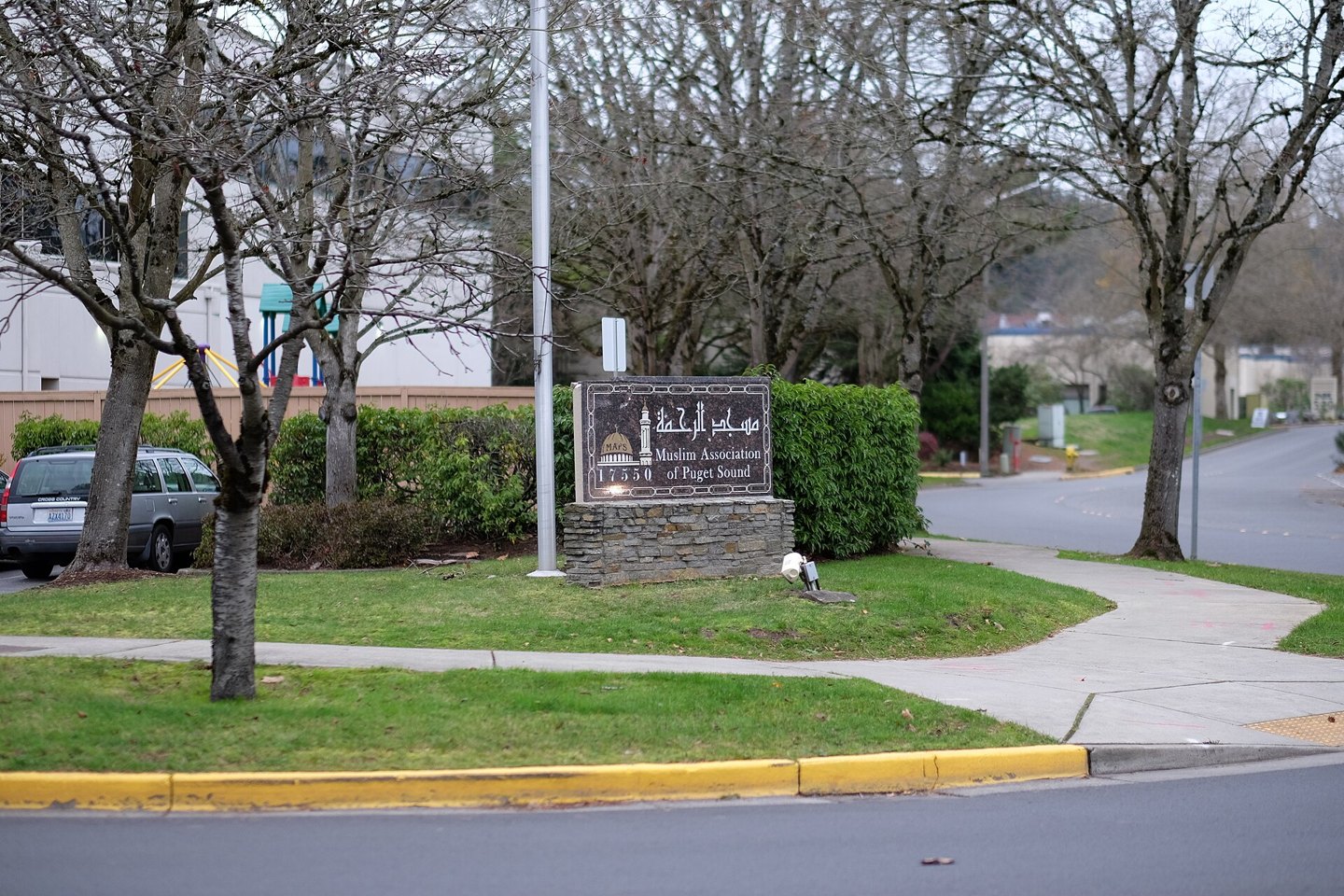
Later in 2016, the same Redmond institution became the focus of a public response to vandalism. A November 22 city bulletin reported that its granite sign had been smashed the previous day. Mayor John Marchione condemned the damage, and the city said MAPS would continue its activities despite increased security concerns.
On December 9, Samantha Pak reported in the Redmond Reporter that more than 200 people attended the replacement sign’s unveiling. Representatives of faith groups, community organizations and government pressed handprints into wet cement beneath it. The photograph here records the earlier sign on November 22, not the dedication. The clinic and the response to vandalism show two different ways neighbors encountered the same institution: through a service partnership and through public solidarity.

A regional story with a precise location
The clinic was in Redmond, east of Seattle. Our Seattle guide offers wider regional context. To explore the founding story, begin with Stang’s reporting and its named participants; the sign photograph documents the institution’s surroundings, not a clinic session.
The practical question this example raises extends beyond healthcare: who will provide the administration, professional skills and continuity that an idea needs? A class project can begin the process, but the working partnership is what makes this account distinctive.
Follow the story
Explore the original reporting and organizational records:
Selected local stories, not a complete account of the state. Events and figures refer to the periods stated above. Check directly with organizations for current services.