
Muhammad and Lonnie Ali founded the Muhammad Ali Center in Louisville in 2005. The boxer’s hometown institution brings together a museum, an archive and education programs. Its work makes a useful distinction between remembering a famous Muslim American and creating opportunities for other people: visitors can examine records of Ali’s life, while students take part in service and leadership activities of their own.

An archive beyond the boxing ring
The Center describes a permanent collection containing legal documents, photographs, artwork and boxing material. Items came from friends, relatives and fans. These different kinds of records allow researchers to ask questions that a highlight reel cannot answer: how Ali was represented, what people kept and how his public life was documented.
Hear people who knew him
The Muhammad Ali Oral History Project began in 2016. It seeks interviews with relatives, childhood friends and boxing peers, alongside people influenced by his life. Oral histories preserve recollection and perspective; they are not interchangeable with a contemporaneous document. Comparing the two is part of the interest of an archive.
The Center’s Digital Museum, established in 2020 with HistoryIT and support from the Institute of Museum and Library Services, provides a way to explore digitized material remotely. Its collections page also explains how to request research access. A museum ticket and an archive appointment are different arrangements.
Young people decide the direction of their service
The Muhammad Ali Center Council of Students is a program for high-school students. The Center describes it as youth-led: participants learn about social justice and nonviolent change, then make decisions about their service and leadership development. Its six organizing principles are confidence, conviction, dedication, giving, respect and spirituality.
The program page describes experiences beyond the museum, including a team-building retreat and a visit to Kentucky’s capital in Frankfort. These are educational activities, not evidence that every participant reaches the same outcome. Consult the Center’s application page for the next available cohort rather than assuming enrollment is open.
Read Ali’s life alongside the institution
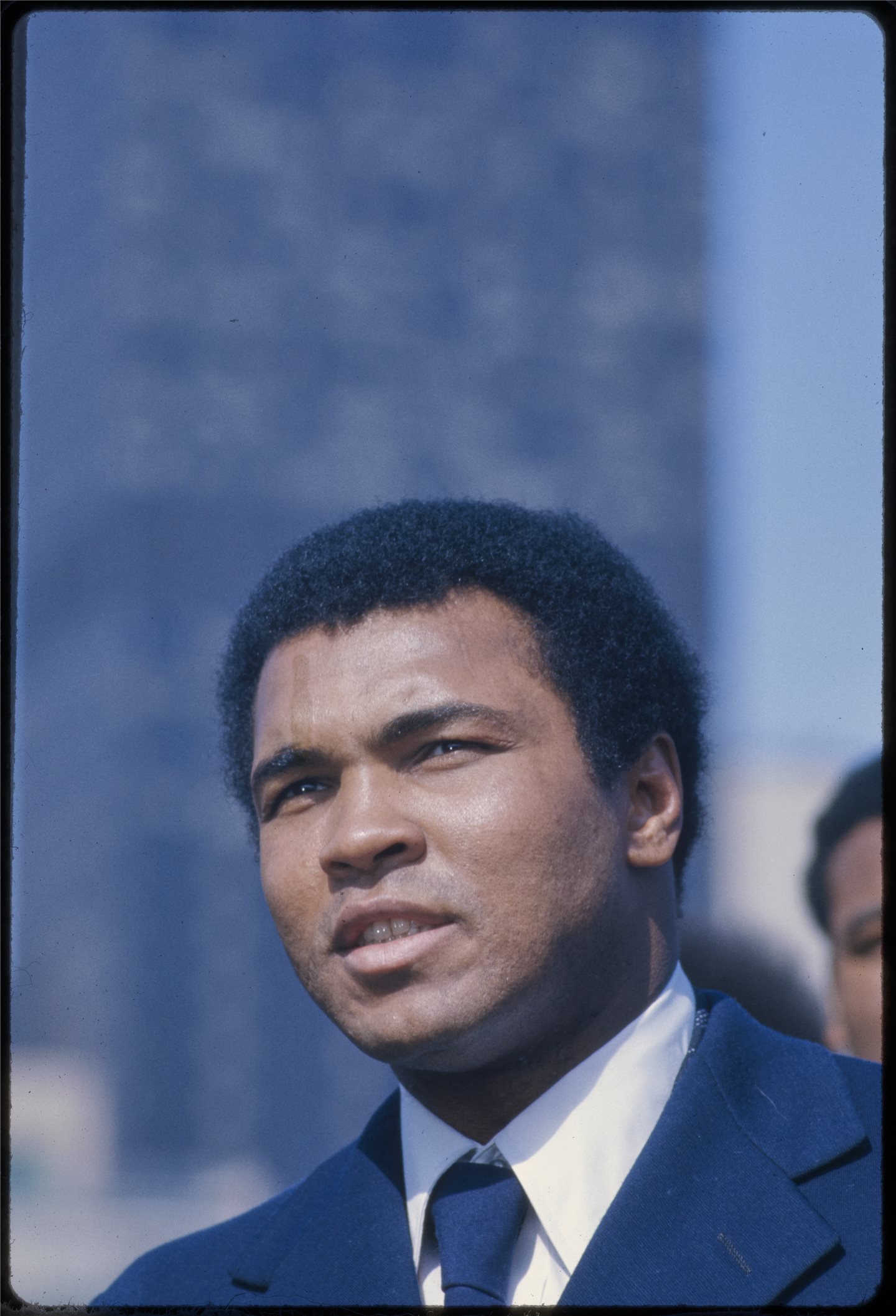
The portrait on this page dates to around 1975, thirty years before the Center’s founding. It shows Ali during his lifetime, not an event at the museum. Continue with Muslim Nook’s longer biography for the relationship between his faith, boxing and public life, then return to the Center’s sources to explore the institution that Muhammad and Lonnie built together.
Follow the story
Explore the original reporting and organizational records:
Selected local stories, not a complete account of the state. Events and figures refer to the periods stated above. Check directly with organizations for current services.