

 History
Muslim Americans in sports: achievement, access, and life beyond the game
Five Muslim American sporting stories connecting achievement with public voice, participation, coaching, and education.
Trace Ali’s Muslim identity through his boxing career, refusal of induction, personal writing, and museum objects.
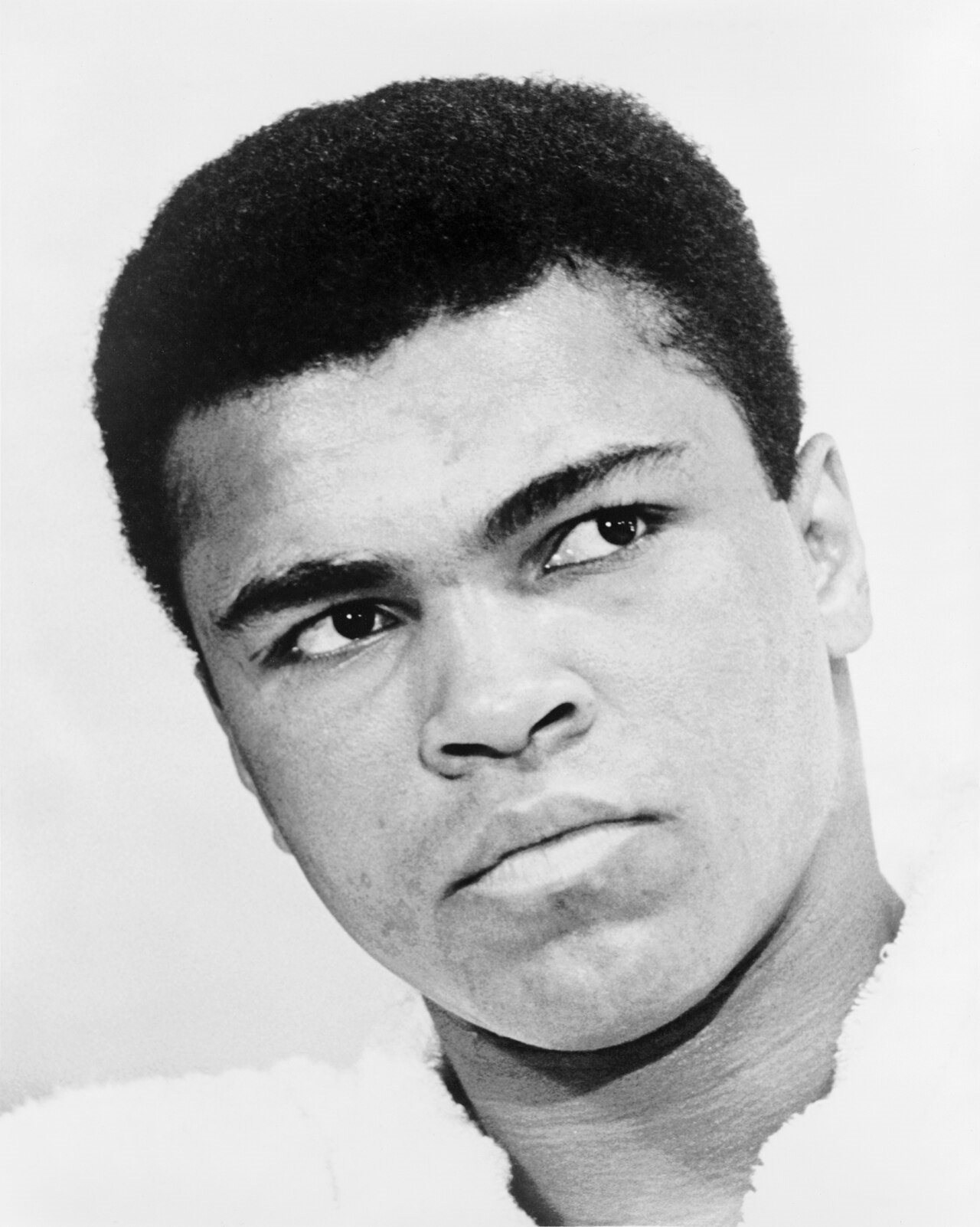
A name stitched across the back of a training robe can tell a political and personal story. The Smithsonian preserves a robe worn by Muhammad Ali at Miami’s Fifth Street Gym during the period when he became heavyweight champion and publicly identified himself with Islam. The garment connects the work of training with the question of how a celebrated Black athlete would define himself.
Born Cassius Marcellus Clay Jr. in Louisville in 1942, Ali won an Olympic gold medal in Rome in 1960. Four years later, his victory over Sonny Liston made him world heavyweight champion. His speed, confidence, and verbal flair had already attracted attention. His religious affiliation and chosen name soon placed that attention in a broader argument about race and self-determination. Muhammad Ali Center
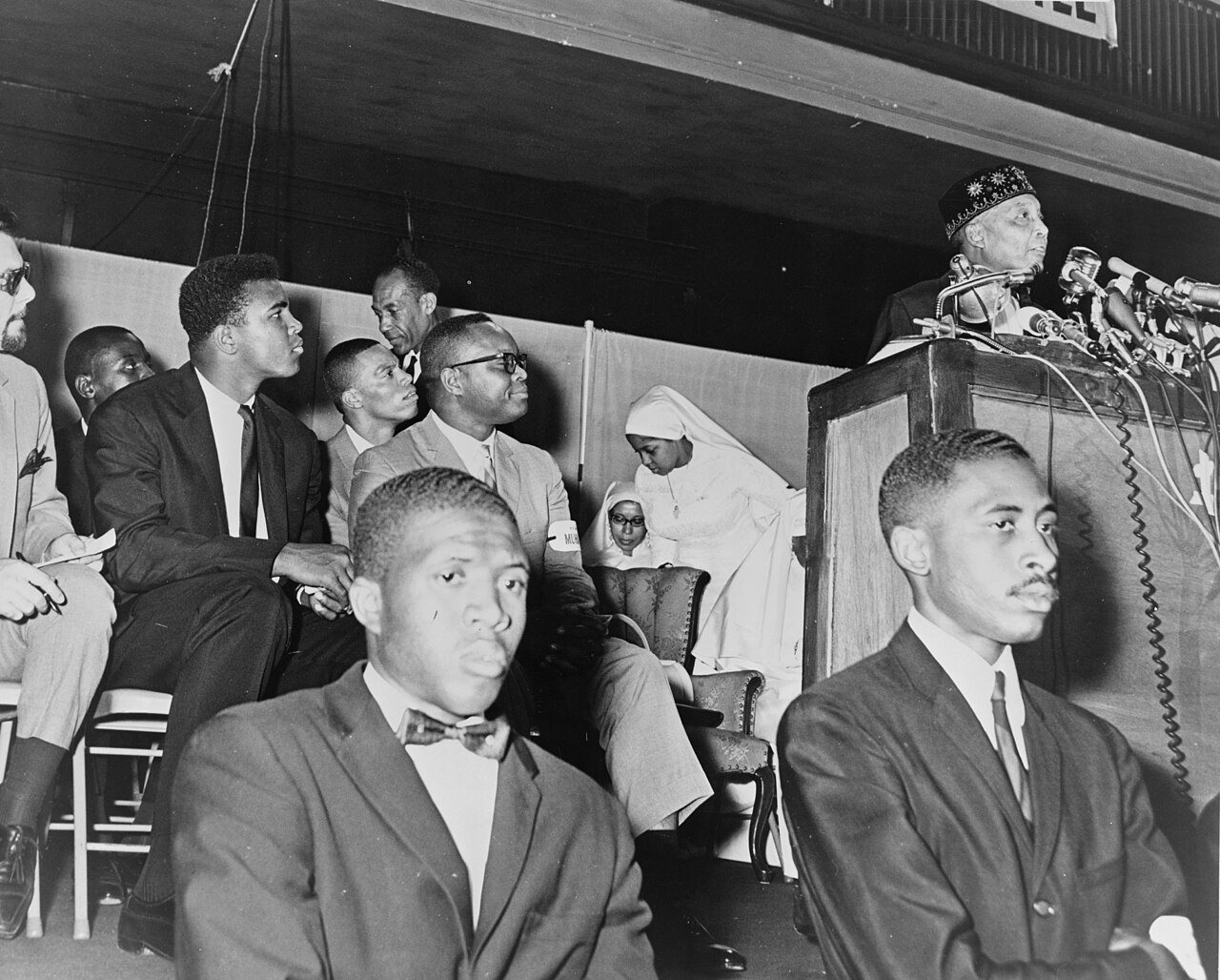
The Ali Center’s boxing chronology records that he briefly used Cassius X before receiving the name Muhammad Ali from Elijah Muhammad in 1964. This was the period of his association with the Nation of Islam. The change made his identity a subject of public dispute, with the name itself becoming part of how admirers and critics addressed him. Boxing timeline
The training robe makes that transformation tangible. Sporting clothing ordinarily identifies an athlete for supporters, spectators, and photographers. Here it also carries a name through which Ali asserted control over his public identity. The Smithsonian places the object within the relationship between boxing, conversion, and social activism. Smithsonian objects
A personal letter to Khalilah Camacho-Ali offers another perspective. The Smithsonian describes it as Ali’s explanation to his then-wife of why he converted from Christianity to Islam. Its audience was intimate, unlike a press conference or televised interview. Together, letter and robe show how the same identity operated in private correspondence and highly public performance. Letter record
In 1967, Ali refused induction into the U.S. military during the Vietnam War. His position reflected his religious convictions and opposition to the war. The resulting suspension from boxing removed him from competition during years when he might otherwise have been defending his title.
The National Portrait Gallery describes his conversion and opposition to the war as central to the controversy surrounding him. An athlete celebrated for exceptional ability became a figure through whom Americans argued about patriotism, conscience, and racial inequality. His later acceptance as a national icon can obscure how divisive his positions were at the time. National Portrait Gallery
Ali returned to boxing and regained the heavyweight title against George Foreman in 1974. He won it again against Leon Spinks in 1978. Those victories were sporting achievements in their own right, while the audiences around them also carried memories of the years he had spent outside the ring.
Ali’s Muslim identity developed over time. The Ali Center records that after Elijah Muhammad’s death in 1975, he followed the teachings associated with Wallace D. Muhammad, later known as Warith Deen Mohammed, as that community moved toward Sunni Islam. A biography should preserve this sequence instead of treating every period of his religious life as institutionally identical.
His public activity expanded across a wide range of causes and relationships. The Center’s chronology includes civil rights activity, opposition to apartheid, and later humanitarian work. In 1996 he lit the Olympic cauldron in Atlanta, an appearance that introduced a new generation to a figure whose physical condition had changed while his public significance remained immense. Life timeline
The Muhammad Ali Center in Louisville provides a starting point for exploring the relationship between the athlete’s career and his values. Check current visitor information directly with the museum. In Washington, Smithsonian collection records allow readers to study objects associated with his training and personal life, whether or not a particular item is currently on display.
The photographs need equally careful attention. A ring portrait, a family image, and a picture of a public appearance each reveal a different setting. Caption the date and occasion so readers can follow the changes across his life.
Ali died in 2016. His place in Muslim American history rests partly on exceptional visibility: millions encountered a Muslim name and identity through a person they already watched closely. The surviving objects and records also preserve a more individual story of choices, relationships, work, and change.
Ali's significance cannot be measured by a single kind of evidence. A bout record can establish a championship. A letter can illuminate a relationship or a belief at a particular moment. An exhibition can show how later generations remember him. Keeping those records distinct makes it possible to appreciate the scale of his public life without treating every retelling as equally authoritative.
This is also why his story belongs in a collection about contributions to America. Sporting accomplishment and public disagreement were parts of the same national life. Readers do not have to agree with every position Ali took to recognize the questions his career made unavoidable: who controls an athlete's public identity, whether celebrity limits a person's right to dissent, and how a country remembers people it once criticized. Continue with Muslim Americans in sports, which places that history alongside team competition, coaching, and education.
HistoryFive Muslim American sporting stories connecting achievement with public voice, participation, coaching, and education.