

 Community
Muslims and everyday neighborhood life
Five documented ways Muslim institutions contribute to American neighborhoods through shared space, housing, civic learning, and environmental work.
Follow the Islamic Society of Northern Wisconsin through its founding records, anniversary gathering and hosted visits.
Muslim community life in Wisconsin extends beyond the state's largest cities. In Altoona, the Islamic Society of Northern Wisconsin describes an institution serving local families through worship, children's education and visits by neighbors. Its own history and the Mahmoud S. Taman Foundation's account provide two routes into the same local story.
The society states that it has been registered as a nonprofit since 1991. The Taman Foundation names five co-founders that year: Mahmoud Taman, Mahmoud Ahmed, Irfane Khatib, Abdel Ghani Khatib and Mostafa Abdelwahid.
Naming the people gives the institutional date a human dimension. It also makes clear that the community was built through a group effort. An organization's incorporation, a building's construction and a later anniversary are different milestones and should not be collapsed into one date.
The foundation records a twenty-fifth-anniversary open house in 2016 attended by 200 friends from the Chippewa Valley. That figure belongs to the foundation's account of that gathering. It is not a current membership count or a population estimate for Muslims in northern Wisconsin.
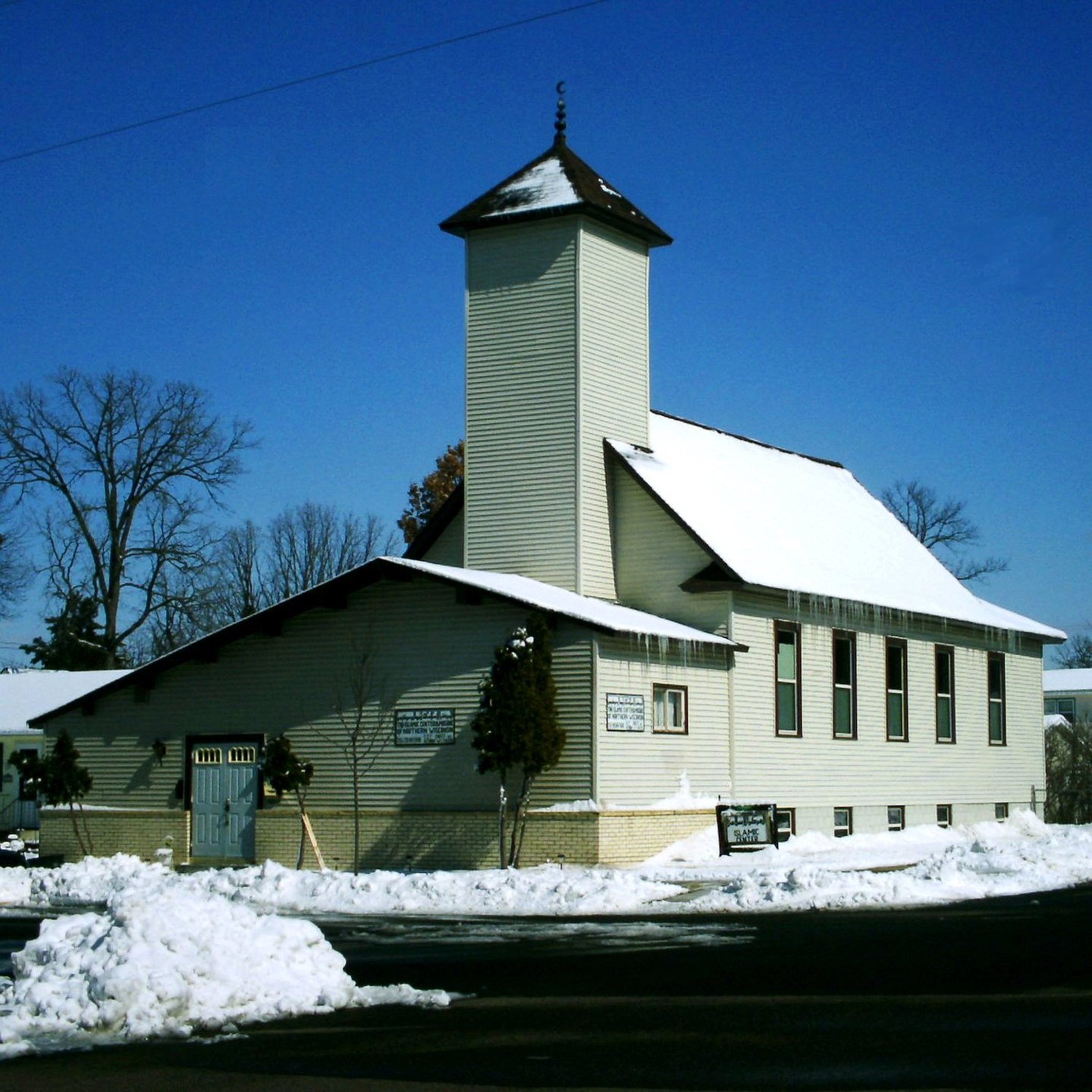
The historical photograph on this page was uploaded in March 2006. Its snowy exterior provides another dated record, but it does not establish the building's condition today. Keep those dates attached when using the image or the anniversary story in a presentation.
The society describes adult religious services and a children's Sunday school. It also reports visits involving UW–Eau Claire, UW–Stout, local schools, churches and community organizations. Those connections make the center a setting for learning across institutions as well as within a congregation.
If you are planning a group visit, use the society's current contact page. Explain the number of participants, the purpose of the visit and any access needs. Ask whether a host can meet you rather than treating a general welcome as a confirmed appointment.
Our separate Wisconsin story follows neighborhood work in Milwaukee. Altoona adds another local setting with its own founders, relationships and historical record. Reading both helps avoid letting one metropolitan story stand in for the entire state, while giving visitors and students a concrete next place to explore.
CommunityFive documented ways Muslim institutions contribute to American neighborhoods through shared space, housing, civic learning, and environmental work.