

 Community
Public service and national service
Five ways to explore Muslim American service, from a military chapel and a veterans’ hospital to Congress and diplomacy.
A Queens College graduate’s life, the uncertainty after September 11, and the institutions preserving his memory.
On October 26, 2001, Mohammed Salman Hamdani’s name appeared in a federal law while his family was still waiting to learn what had happened to him. Section 102 of the USA PATRIOT Act identified the 23-year-old New Yorker as missing and believed to have gone to the World Trade Center to offer rescue assistance. The passage sat within a condemnation of discrimination against Arab and Muslim Americans.
That document captures an unfinished moment. His family would receive confirmation of his death in March 2002. Remembering him means holding that chronology alongside the life he was building: a Queens College education, emergency medical training and an ambition to become a doctor.
Queens College identifies Hamdani as a Muslim American graduate, EMT and medical-school applicant employed at Rockefeller University. A contemporary Washington File report specifies his workplace as the Howard Hughes Medical Institute at Rockefeller, where he was a laboratory technician.
The April 15, 2002 report by Laura J. Brown also describes his biochemistry studies and participation in the NYPD cadet program. His mother, Talat, recalled that he had worked for the private ambulance company MetroCare and sometimes kept in touch with patients afterward. These are family recollections, recorded in the report, rather than an independently documented account of every encounter.
His training and employment give the story a life before September 11. He was preparing for a medical career, not yet practicing as a doctor.
Brown reported that Hamdani left home for work on September 11 but never arrived. His family believed he had diverted toward the World Trade Center to help. That account does not reconstruct his final movements or establish how many people he assisted.
On March 20, 2002, according to the same report, officers told his parents that his remains had been found near the north tower. His funeral followed on April 5 at a Manhattan mosque on East 96th Street. Mayor Michael Bloomberg and Police Commissioner Raymond Kelly attended. Kelly’s remarks acknowledged that the number of people Hamdani might have helped was unknown.
The distinction matters: recognition of his service does not require an invented rescue scene. The record documents a trained EMT, a disappearance, recovery of his remains and public remembrance.
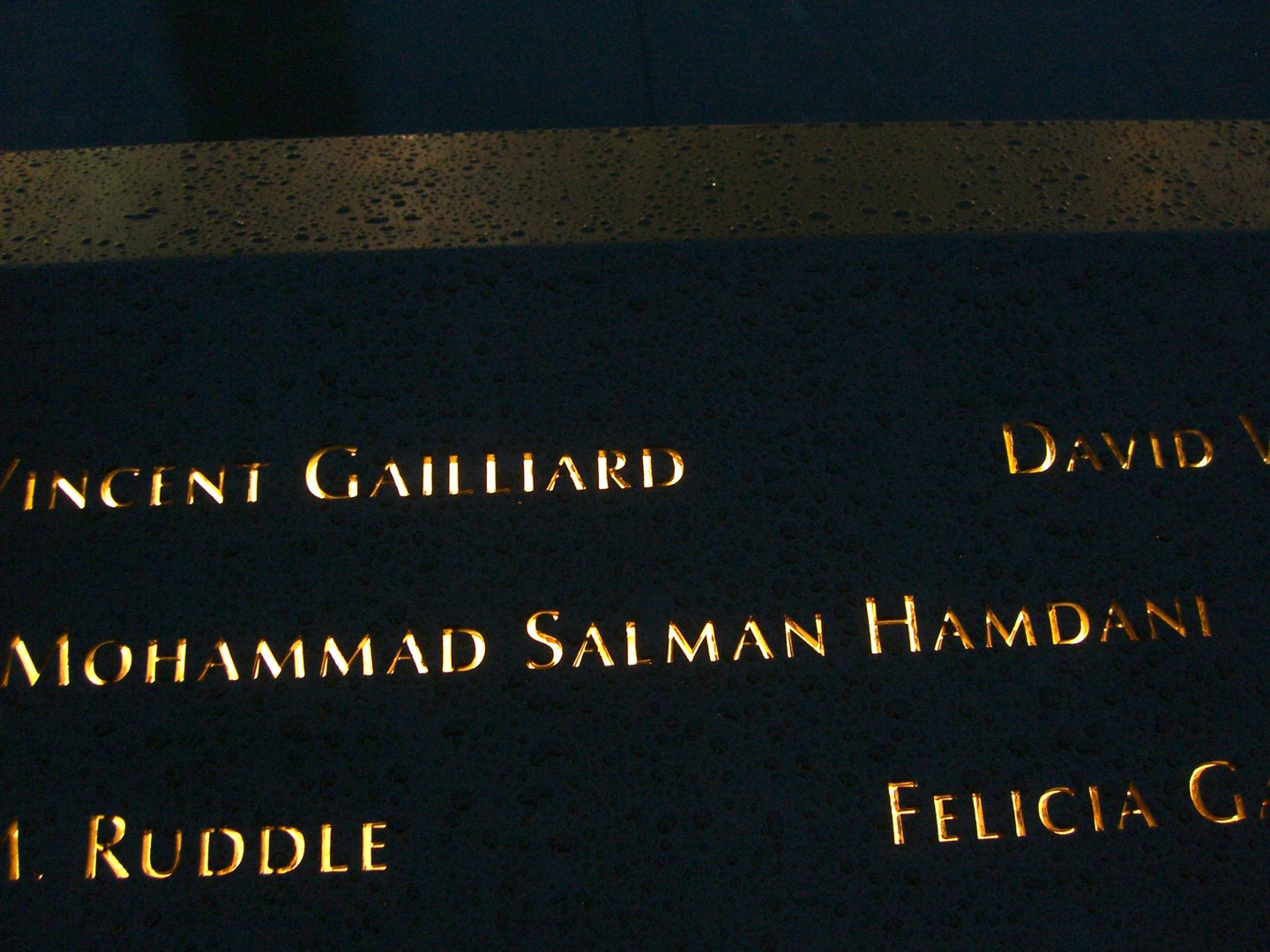
Readers can locate Hamdani in Public Law 107–56, section 102(a)(6), on printed pages 276–277. The finding begins on one page and continues onto the next. Its wording describes what was believed in October 2001, before the confirmation reported the following spring.
The surrounding section condemns violence and discrimination and calls for recognition of Americans’ patriotism across ethnic, racial and religious backgrounds. Hamdani’s inclusion belongs in that context. It was a congressional statement of recognition while he was missing, not a detailed investigation of his actions at the towers.
Queens College’s 2023 announcement described a screening of the 38-minute documentary American Jedi: The Salman Hamdani Story. The film combines family home videos with interviews, including family members, friends, professors and two Muslim survivors of the attacks. Its title also recalls Hamdani’s interest in Star Wars.
The college planned a memorial-plaque unveiling at Cooperman Plaza near its library before the October 5 screening. The announcement also described the Salman Hamdani Memorial Award for a graduating senior accepted to medical school, recognizing scholarship and character. That award connects his unfinished ambition with another student’s next step.
For the film, start with the college’s announcement and check library access; the historical event notice is not a promise of public streaming today.
Continue with Muslim military chaplaincy for another account of professional preparation and public service, or explore the public service collection.
CommunityFive ways to explore Muslim American service, from a military chapel and a veterans’ hospital to Congress and diplomacy.