

 Community
Public service and national service
Five ways to explore Muslim American service, from a military chapel and a veterans’ hospital to Congress and diplomacy.
An Indianapolis public-service story told through constituent help, local access, and documented congressional work.
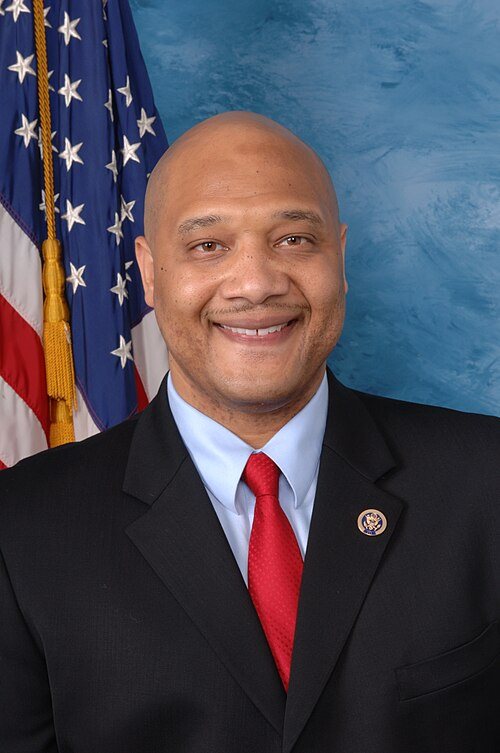
A congressional biography usually begins with offices held and committees joined. A constituent may encounter a representative in a different way: through a staff member trying to obtain an agency response, a youth opportunity fair, or a meeting in the district. André Carson's official records offer a way to examine those ordinary points of contact.
Carson's public biography explicitly identifies him as Muslim. It also places him in Indianapolis: an east-side upbringing, Arsenal Tech High School, local government, and work in law enforcement before Congress. Those details matter because representation is rooted in a place, even when the officeholder participates in national debates.
The official biography describes Carson's service on the Indianapolis City-County Council and work with Indiana's Department of Homeland Security. It lists a bachelor's degree in criminal justice management and a master's degree in business management. The path connects local public safety, city government, and national office.
The same biography identifies a milestone: Carson became the first Muslim to serve on the House Intelligence Committee. The appointment placed a publicly Muslim representative inside an institution concerned with national-security oversight.
Carson's federal-agency help page describes assistance available to residents of Indiana's Seventh Congressional District who are struggling to obtain an answer from an agency. It explains that the office cannot guarantee a favorable result. It also directs constituents to an authorization process before staff can seek personal case information.
That limitation is important. Congressional assistance is not a promise to bypass a rule or obtain a particular decision. The published offer is help in pursuing a response and understanding a problem. Readers should use the official page for its current procedure and should not send case documents to Muslim Nook.
The contribution here is access: a staffed connection between a resident and an institution. For a resident unsure where to turn, knowing that the district office offers an agency-contact route is useful information in itself.
The office's published description of its 2019 Youth Opportunities Fair illustrates another approach. The event information brought together employment, internship, service, and volunteer possibilities at the Indianapolis Central Library. It described resume review, mock interviews, and follow-up guidance, with activities for young people at different ages. Read the historical event information.
The useful detail is the combination of introductions and preparation. Meeting an employer is different from knowing how to describe one's interests or what to do after a conversation. A public office can act as a convenor, bringing providers and participants into a shared setting.
This is a historical example, not an upcoming event listing. Someone seeking opportunities now should check current official announcements rather than rely on an old schedule.
Carson's Muslim identity is relevant to the history of representation. It does not mean that his constituency is exclusively Muslim, that all Muslim Americans share his politics, or that every position he takes is a religious position. The office's practical services are described in terms of district residency and the problem presented.
That is what makes this story part of Muslim life in America. It concerns a publicly Muslim person doing work within a shared institution, alongside colleagues and staff, for people with many backgrounds and views.
Continue with Rashad Hussain's diplomatic appointment to compare another public role. The public service collection also looks beyond elected office, including military chaplaincy, veterans' care, and emergency service.
CommunityFive ways to explore Muslim American service, from a military chapel and a veterans’ hospital to Congress and diplomacy.