 Community
Muslims and everyday neighborhood life
Five documented ways Muslim institutions contribute to American neighborhoods through shared space, housing, civic learning, and environmental work.
Follow a documented path through NHTI, Plymouth State and UNH, then into Concord public service.
Ali Sekou's route into Concord public life passed through several New Hampshire classrooms. A February 2024 profile in New Hampshire Magazine follows his move from Niger in 2012, his studies at three institutions and his election to the city council in 2023. The sequence offers a concrete story about education and participation without reducing it to an election milestone.
The profile records an associate degree in hospitality and management from NHTI, a political-science bachelor's degree from Plymouth State University and a master's degree in community development and policy from the University of New Hampshire.
Those subjects show a changing educational path. They should not be treated as a prescribed route for every newcomer or as proof that a particular qualification guarantees public office. What the reporting establishes is the progression in one person's life.
The same account describes volunteering with schools, community groups and nonprofit boards while pursuing study and employment. Public participation appears here as work accumulated over time, rather than something that started only with a campaign.
The February 2024 report says Sekou entered council office that January following the 2023 election. It also identifies his involvement with the Islamic Society of Greater Concord.
A later October 2025 account gives an endpoint for his society presidency: November 2024, followed by Shafiq Chaudhry. Reading the two reports together prevents an older biography from silently becoming a current officeholder list. This article follows documented stages of Sekou's career; it does not assume every title remains unchanged today.
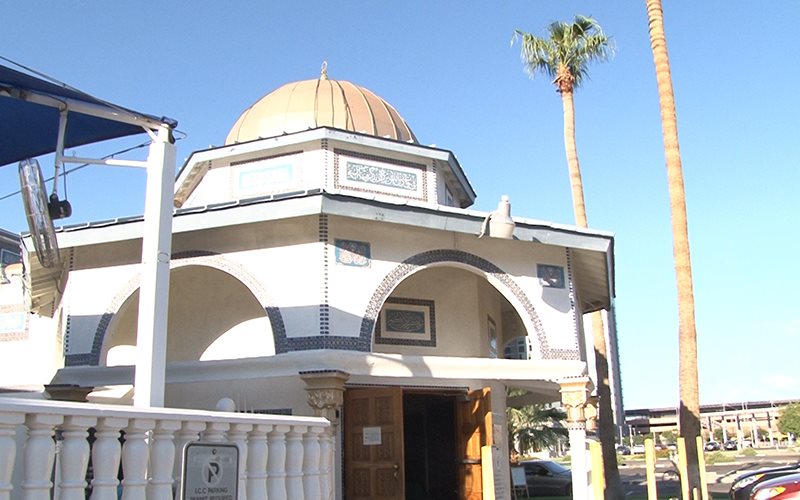
The society's separate story concerns a former church hall, renovations and the practical work of maintaining a gathering place. Sekou's educational route gives another perspective on that community: skills and relationships formed across colleges, workplaces and civic organizations.
For a student interested in public service, useful questions include which local issue you want to understand, which institutions work on it and what a manageable volunteer commitment would involve. These are starting points for exploration, not promises of a particular career result.
Read the two dated magazine accounts together. One introduces the new council member; the other follows a community institution beyond his term as its president. The combination makes room for both individual initiative and work that continues across changes in leadership.
CommunityFive documented ways Muslim institutions contribute to American neighborhoods through shared space, housing, civic learning, and environmental work.