
 Community
Muslim contributions to healthcare in America
Explore a neurosurgical invention, neighborhood clinics, mental-health institutions, and medical volunteering through five documented stories.
From a 1967 meeting in Ohio to domestic disaster response, IMANA’s history shows the organizational work behind medical volunteering.
The Islamic Medical Association of North America's history begins at a student-association meeting in Columbus, Ohio, in 1967. Muslim physicians including Mobin Akhtar and Amjad Ali formed a medical association within the Muslim Students Association. The organization that developed from that meeting became a network for professional exchange, education, and service.
The location and setting are revealing. A group organized around shared identity became a place to connect specialized skills. Its later activities would include medical relief, but the founding was also about creating relationships among physicians working within North American institutions.
IMANA's history records a bulletin first published in 1970 under editor Muhammad Umar. In 1976 it became the Journal of IMA, later the Journal of IMANA. Its subjects included original research, case reports, medical history, and biomedical questions.
The journal is no longer published. Its place in the history is nevertheless substantial: a professional network created a means of recording and exchanging ideas rather than depending entirely on meetings or personal contacts.
An association's publication can also become an archive of the questions its members considered important. Article titles, author affiliations, and changing subjects help document a professional community over time. That historical value is distinct from treating every older medical article as current clinical guidance.
The organization's account describes annual scientific meetings and continuing medical education. It also records teaching exchanges and a clinical observership program that enabled international students to observe healthcare delivery in the United States.
These activities connect the American setting with a wider professional world. A physician may work in an American hospital while maintaining educational relationships elsewhere. An association provides one structure through which those relationships can become organized rather than remaining purely personal.
In 1992, IMANA also established an institute devoted to the history of Islamic medicine. That project belongs to historical scholarship and education. It should not be confused with a claim that historical treatments have been clinically validated for present use.
IMANA's medical-relief timeline records support for local physicians and medical supplies after Hurricane Katrina in New Orleans in 2005. The language is specific: supporting physicians and providing supplies, rather than claiming to have operated an entire disaster response.
The timeline also records financial support for psychiatric and psychological counseling connected with the Sandy Hook tragedy in 2012 and a contribution to Oklahoma tornado relief in 2013. These entries show different forms of response. Sending clinicians, supporting an existing service, and supplying funds are separate activities with different responsibilities.
This article attributes those actions to IMANA's published record. The timeline is an organizational source, not an independent audit. Its usefulness is in identifying dated activities that can be followed through in additional records, rather than supplying a single total for lives changed.
The domestic-fund page describes support teams for the U.S. Virgin Islands Department of Health during the COVID-19 response, in a partnership the organization identifies with FEMA. It also describes physician volunteering in Puerto Rico after a hurricane and distribution of protective masks to American hospitals.
Including Puerto Rico and the U.S. Virgin Islands prevents domestic service from being reduced to the continental states. These places are part of the organization's account of work at home, even when their geography falls outside a familiar mainland map.
The page does not clearly date every numerical total. This profile therefore uses the documented types and locations of activity without converting the figures into a current annual impact claim. That keeps the historical account useful without giving undated fundraising numbers a precision they cannot support.
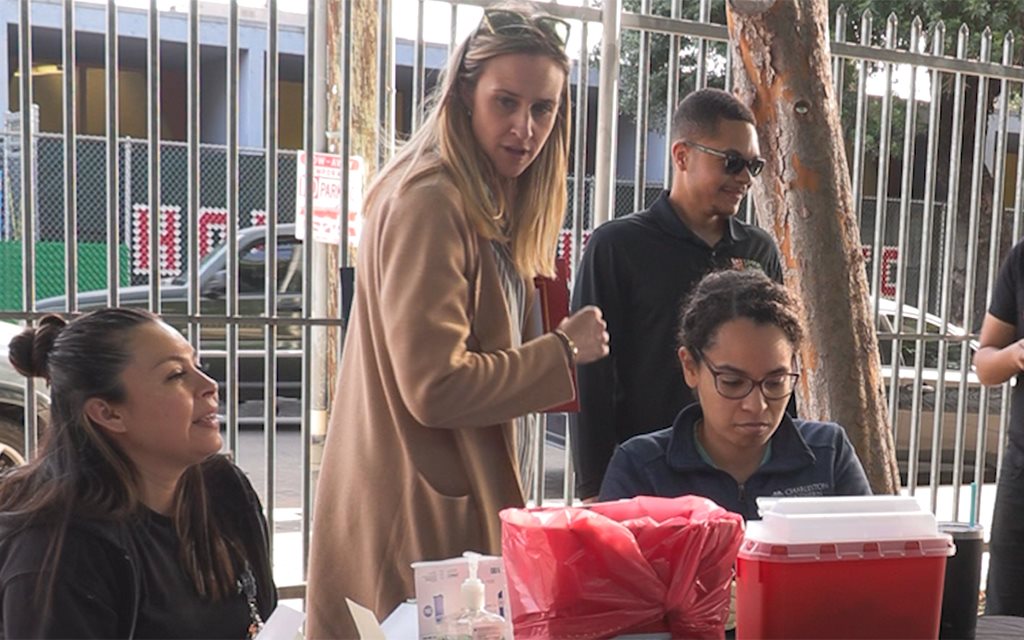
IMANA Medical Relief's volunteer FAQ describes credential checks, selection based on the needs of a mission, preparation materials, and coordination with local partners. It distinguishes healthcare professionals from non-medical participants and states that the latter cannot provide patient care.
Those operational details are a substantive part of the contribution. Good intentions do not supply a professional license, a referral pathway, or local knowledge. A medical organization has to match what volunteers can do with what a particular setting requires.
The FAQ also describes working with local organizations and arranging translation where needed. Such details make the service relationship more concrete than an image of visiting doctors alone. Local partners help determine how outside support connects with people and institutions already present.
IMANA's history brings together several kinds of work: publishing, education, professional connection, and relief. None should be used as a substitute for evaluating another. A successful conference is not evidence of a clinical outcome, just as a relief donation does not describe a research program.
What the record does show is a Muslim professional association developing ways to put specialized knowledge and organized resources into public service. Its American story includes an Ohio founding meeting, a medical journal, and responses to emergencies in states and territories.
For a different scale of organization, read UMMA Health's South Los Angeles history. A neighborhood clinic and a national professional network solve different problems, but both make the work behind a clinical encounter visible.
CommunityExplore a neurosurgical invention, neighborhood clinics, mental-health institutions, and medical volunteering through five documented stories.