 Community
Muslim contributions to healthcare in America
Explore a neurosurgical invention, neighborhood clinics, mental-health institutions, and medical volunteering through five documented stories.
How Muslim medical students helped build a neighborhood healthcare organization, and why its history extends beyond a founding moment.
UMMA Health began with a question about a specific place: what could medical students do about inadequate access to care in South Los Angeles? Its institutional history locates the beginnings in 1992, when Muslim students at UCLA and Charles R. Drew University organized after the city's civil unrest. The first patient arrived in September 1996.
The four years between those events are part of the story. A decision to serve a neighborhood did not immediately produce a clinic. Buildings, equipment, money, university support, and people willing to work had to come together before the idea could become a clinical encounter.
UMMA's own timeline records collecting donated equipment and raising funds while construction proceeded. It describes volunteers of different faiths joining the work and incorporation as a nonprofit after the clinic opened. These details explain the organization's development more clearly than a broad claim about generosity.
The name originally stood for University Muslim Medical Association. The Muslim identity is explicit in the organization’s history and stated inspiration. It describes the founders and the institution, not a religious condition imposed on patients.
That distinction is central to understanding the contribution. A healthcare organization can emerge from a particular community while addressing the needs of neighbors who do not share that community's identity. The connection between motivation and public service is visible in the institution's stated commitment to care regardless of ability to pay.
The founding is only one episode. UMMA's timeline describes a financial crisis in 2000 and support from donors of different faiths that kept the clinic operating. It later records designation as a federally qualified health center in 2008 and expansion of behavioral-health services in 2015.
These events show that institutional survival requires more than the energy that launches a project. A clinic must keep paying for people, facilities, systems, and supplies. A compelling origin story cannot replace that continuing work.
The timeline should also be read critically. Its entries for the Fremont Wellness Center repeat similar wording under different years. This article therefore does not use that page to establish a precise opening date for that location. Small inconsistencies in a primary source are a reason to narrow a claim, not to invent a resolution.
The Southside Coalition of Community Health Centers describes UMMA as a place for regular follow-up, patient education, and referrals. Its account emphasizes ongoing relationships rather than only one-time encounters. It also identifies the organization as a teaching site for students and resident physicians.
Those functions are connected but distinct. Patients need care; trainees need supervised opportunities to learn. The value of the teaching role cannot be measured simply by counting visitors to a clinic, and the presence of trainees does not by itself establish clinical quality.
For 2022, the coalition reports 6,868 unique patients and a patient population predominantly identified as Hispanic or Latino, with African American patients also represented. The dated figures make the cross-community character of the service concrete. They should not be presented as today's total or as a census of every person UMMA has ever served.
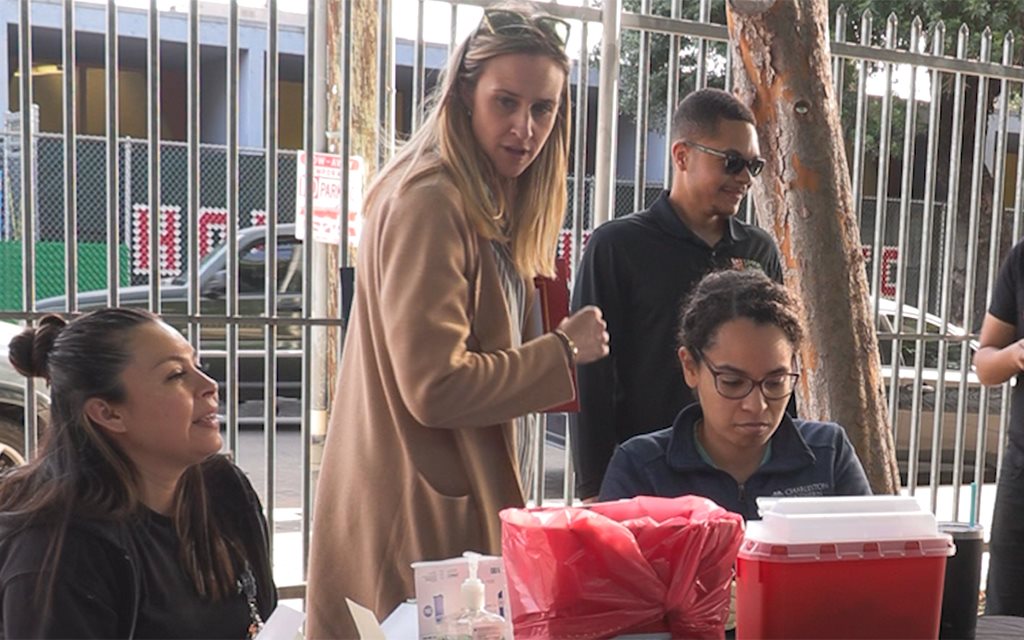
Independent reporting by Cronkite News in 2025 includes a clinician recalling undergraduate volunteering that ranged from organizing medication boxes to cleaning graffiti. The recollection is a useful detail because it makes the work less abstract. A functioning institution needs maintenance and administration as well as professional expertise.
The same report discusses barriers such as transportation, language, digital access, and trust. A building may be geographically nearby while remaining difficult for a person to use. An appointment system, referral, or application process can become another obstacle if it assumes resources that patients do not have.
UMMA's significance therefore cannot be captured by a photograph of a doctor with a patient alone. Its contribution also involves making connections between a neighborhood and a wider healthcare system. The reporting supplies an outside account of that work, while many of the operational details still come from the organization and its partners.
It is tempting to organize this history around a few admirable people. The evidence supports a more durable subject: an institution that changed over time and drew on several kinds of participation. Students, clinicians, volunteers, donors, partner organizations, and patients all appear in the record.
Their roles are not interchangeable. A donor provides resources, a clinician provides trained care, and a patient brings knowledge of their own circumstances. Treating them as separate participants helps avoid a rescue narrative in which a neighborhood exists only as a background for someone else's achievement.
UMMA's current website is the appropriate starting point for service information, since locations and appointment arrangements can change. This historical profile does not promise availability or eligibility. Its purpose is to explain how a Muslim-founded organization became part of South Los Angeles civic infrastructure.
Compare it with HUDA Clinic in Detroit. Both histories connect community organizing with access to care, while their founding settings and institutional paths remain distinct.
CommunityExplore a neurosurgical invention, neighborhood clinics, mental-health institutions, and medical volunteering through five documented stories.