

 Community
Muslims and everyday neighborhood life
Five documented ways Muslim institutions contribute to American neighborhoods through shared space, housing, civic learning, and environmental work.
Explore Hartford International’s Muslim chaplaincy pathway and the educators connecting it with community institutions.
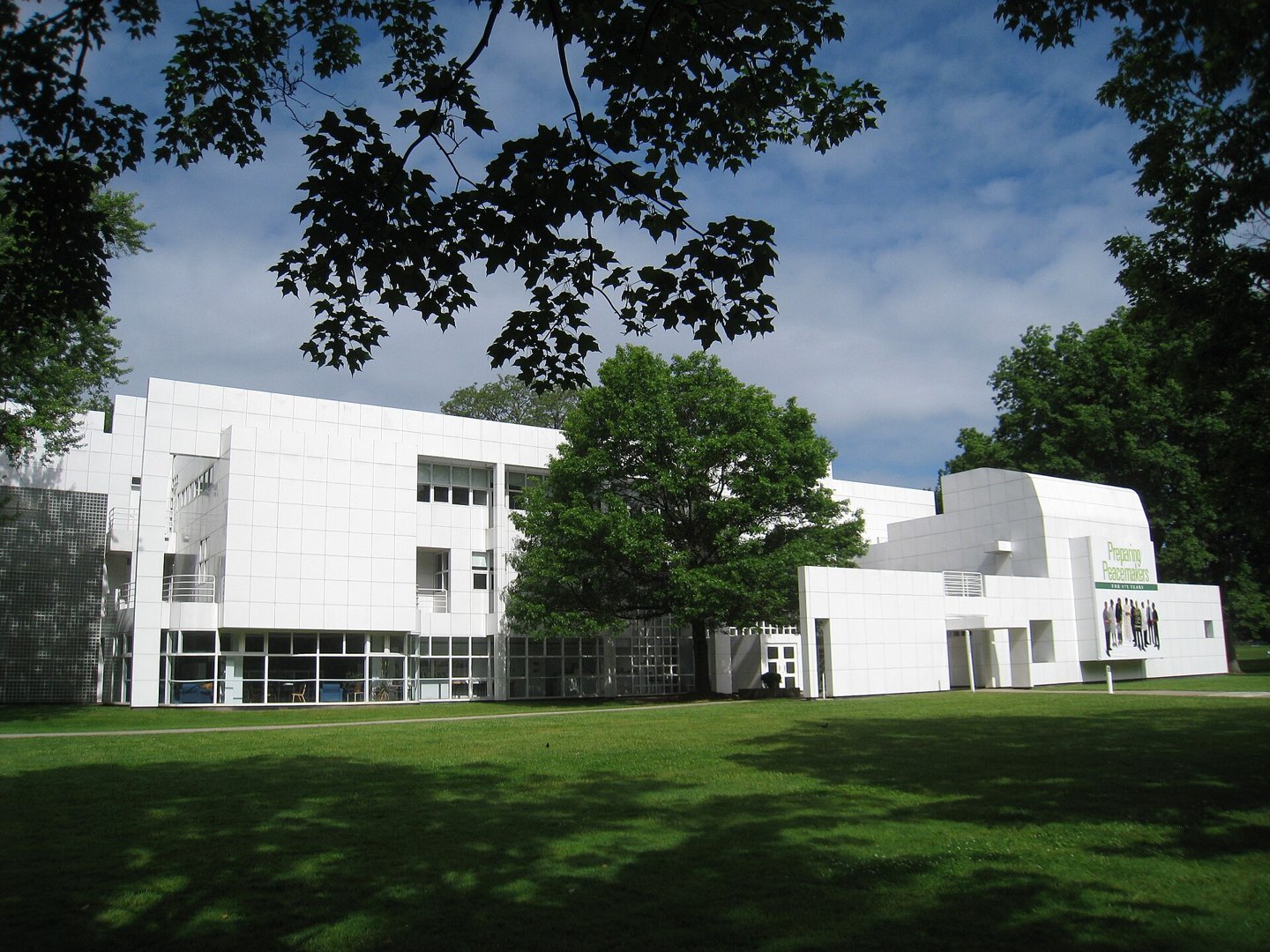
Hartford International University for Religion and Peace provides a Connecticut setting for Muslim chaplaincy education. Its Islamic chaplaincy program began in 2001, and its present pathway page describes graduates working in healthcare, higher education, prisons, military and community settings. The story connects academic preparation with work inside institutions serving people from many backgrounds.
The university was known as Hartford Seminary before adopting its current name in 2021. Older photographs and announcements bearing the seminary name therefore belong to the institution's history; they do not identify a separate school.
The current pathway describes learning that combines chaplaincy theory and practice rooted in the Islamic tradition. It also explains that the appropriate academic route depends on an applicant's previous education and experience. Prospective students should use the current admissions information, rather than treating an older graduate's qualifications as today's entry requirements.
Hartford's published information connects Aida Mansoor's field-education work with the Muslim Coalition of Connecticut and the Islamic Association of Greater Hartford. Her career makes the relationship between study and local service visible: preparation for a profession can develop alongside relationships with community organizations.
The university's biography of Bilal W. Ansari records correctional chaplaincy in Connecticut from 1997 to 2009 and subsequent work with the Federal Bureau of Prisons. His account also includes clinical pastoral education and university service. Those named settings offer a more concrete picture of chaplaincy than the assumption that it happens only in a mosque.
Begin with the Islamic Chaplaincy Pathway. Ask admissions how your previous study relates to the available pathways, how field education is arranged and what additional preparation your intended workplace may require. A degree pathway should not be read as a guarantee of employment or professional certification.
For readers who are simply curious, compare the educators' biographies with the university's program description. One explains an individual's route; the other explains what the institution offers. Our Connecticut collection also follows coalition volunteers working with Hartford service organizations, showing another way education and community relationships meet in practice.
CommunityFive documented ways Muslim institutions contribute to American neighborhoods through shared space, housing, civic learning, and environmental work.