
West Virginia University's Muslim Students Association partnered with Islamic Relief USA to pack 30,000 meals during a three-hour event on WVU's Evansdale campus. Student association president Shahd Hanif contacted Islamic Relief USA after learning of a similar project at the University of Pittsburgh. The organizers invited both Muslim and non-Muslim volunteers and planned the meals for people in need locally and overseas.
An idea traveled from one campus to another
The WBOY report, preserved by Islamic Relief USA, describes Hanif learning about a similar University of Pittsburgh project and using that connection to reach the relief organization. The result was a local student-led event with a partner responsible for the wider distribution process.
Packing is one stage of the journey
The report places the event in the Gold Room on the Evansdale Residential Campus. Islamic Relief USA’s volunteer-engagement representative explained that destinations could depend on changing needs. The article does not document the final recipients of these particular packages.
For that reason, 30,000 is retained as the reported meal-packing figure. It is not converted into 30,000 individual beneficiaries, or multiplied into a larger audience claim. The distinction keeps the students’ documented contribution clear.
Participation beyond the association
Organizers advertised beyond their own membership and welcomed volunteers of different backgrounds. This makes the event useful for students wondering how a campus association can convene a shared project with an experienced outside organization.
Our campus starter article explores finding a community at university. The giving collection offers other examples of organized service. Neither link implies that this 2022 event is currently running or accepting participants.
Look closely at the woodwork in Huntington
In a different part of the state, the Huntington Museum of Art offers a route into the material culture of the Near East. Drs. Joseph and Omayma Touma donated a collection and funded a gallery for it. The museum describes pottery, glass, metalwork, textiles and furniture, displayed within carved and inlaid woodwork made for the space by craftspeople in Damascus, Syria. The gallery’s setting is itself something to examine alongside its objects.
This is a museum collection, separate from the WVU student project. Its relevance here is the opportunity to study art and craftsmanship in West Virginia; the collection does not establish the religious identities of its donors or every maker.
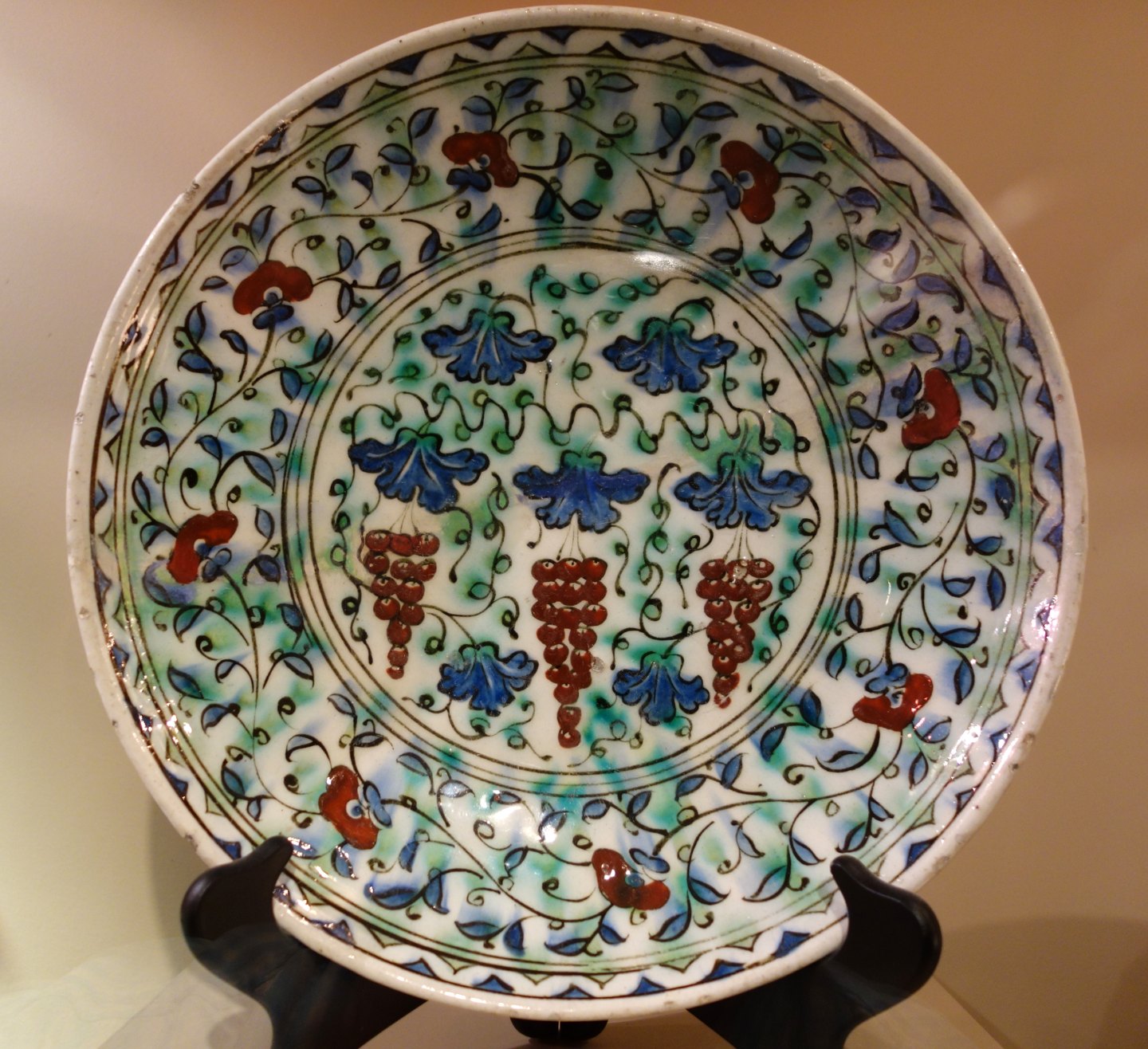
The photographed Iznik dish offers a small close-looking exercise: three grape clusters occupy the center, while a separate band of flowering stems follows the rim. Compare how the inner and outer patterns use the circular surface. The photograph records a 2013 museum display, not a promise that the same object is currently on view.

An old style is not always an old object
The museum’s exhibition In the Shadow of the Mamluks ran from June 13 to November 1, 2026. It explored both Mamluk decorative arts and later revivals. One identified example was a Syrian bowl with peacocks and scrolling vines, dated approximately 1850–1920: engraved brass with silver and copper inlay, given by Mona Touma Elliot, accession 2024.2.75. That date places the bowl long after the Mamluk Sultanate ended in 1517.
A useful question for any gallery label follows: does the date describe the object’s manufacture, or the historical style it draws on? The 2026 exhibition has ended; the Touma collection is permanent, but consult the museum about what is currently on display.
Follow the story
Explore the original reporting and organizational records:
Selected local stories, not a complete account of the state. Events and figures refer to the periods stated above. Check directly with organizations for current services.