Unpaid wages give Mazahir Salih’s organizing a specific measure. The Iowa International Center’s 2019 honoree biography credited her and fellow organizers with recovering nearly $60,000 owed to workers. This was a cumulative figure reported at that time, not an annual amount or a current total.
Iowa City: organizing before and alongside public office
Salih moved to Iowa City in 2012 and helped establish the Center for Worker Justice of Eastern Iowa. The award biography records service as vice president, president and community organizer. It also documents her election to an at-large city council seat in November 2017 and explicitly identifies her as an openly Muslim candidate. These are distinct kinds of work: organizing to recover earned pay and holding elected office.
Cedar Rapids: a small building with a long public life
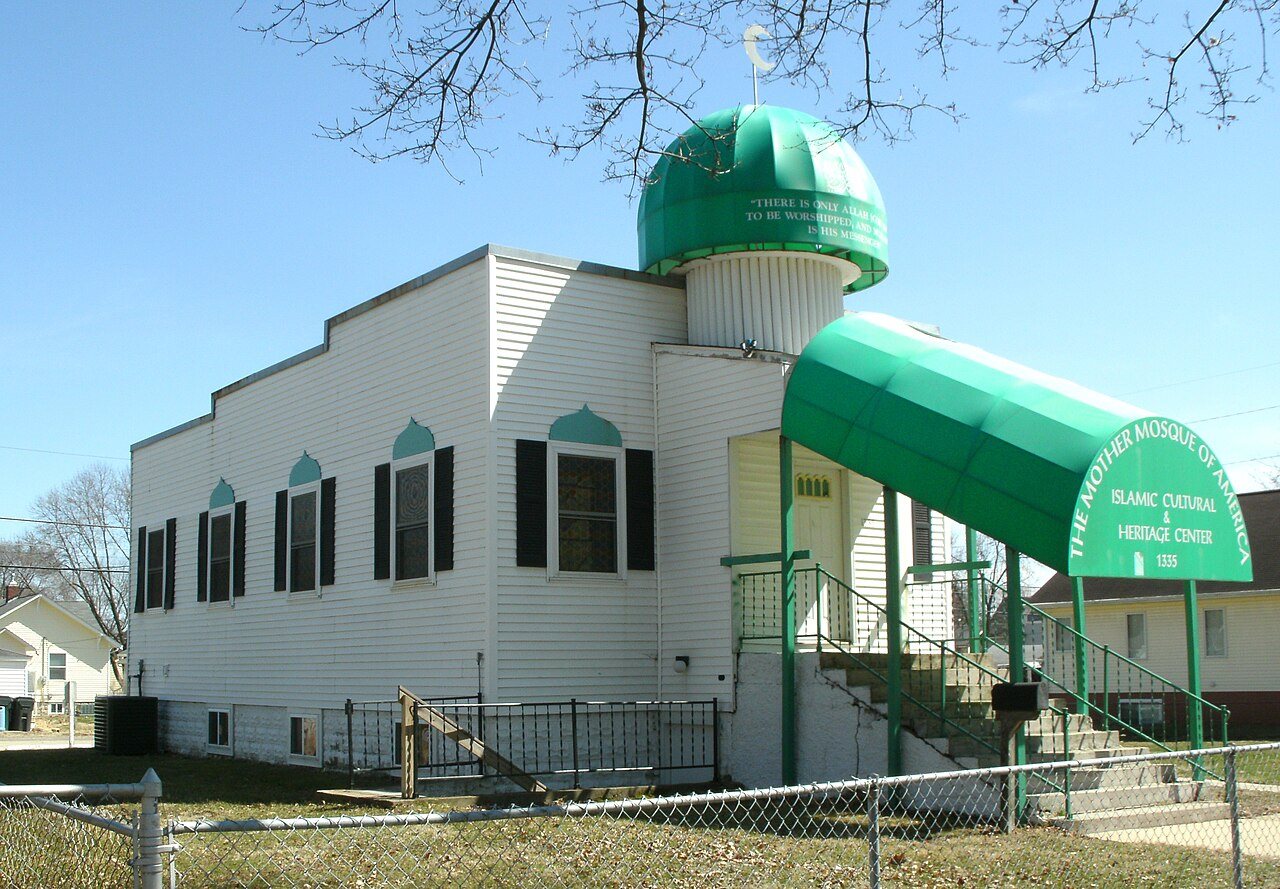
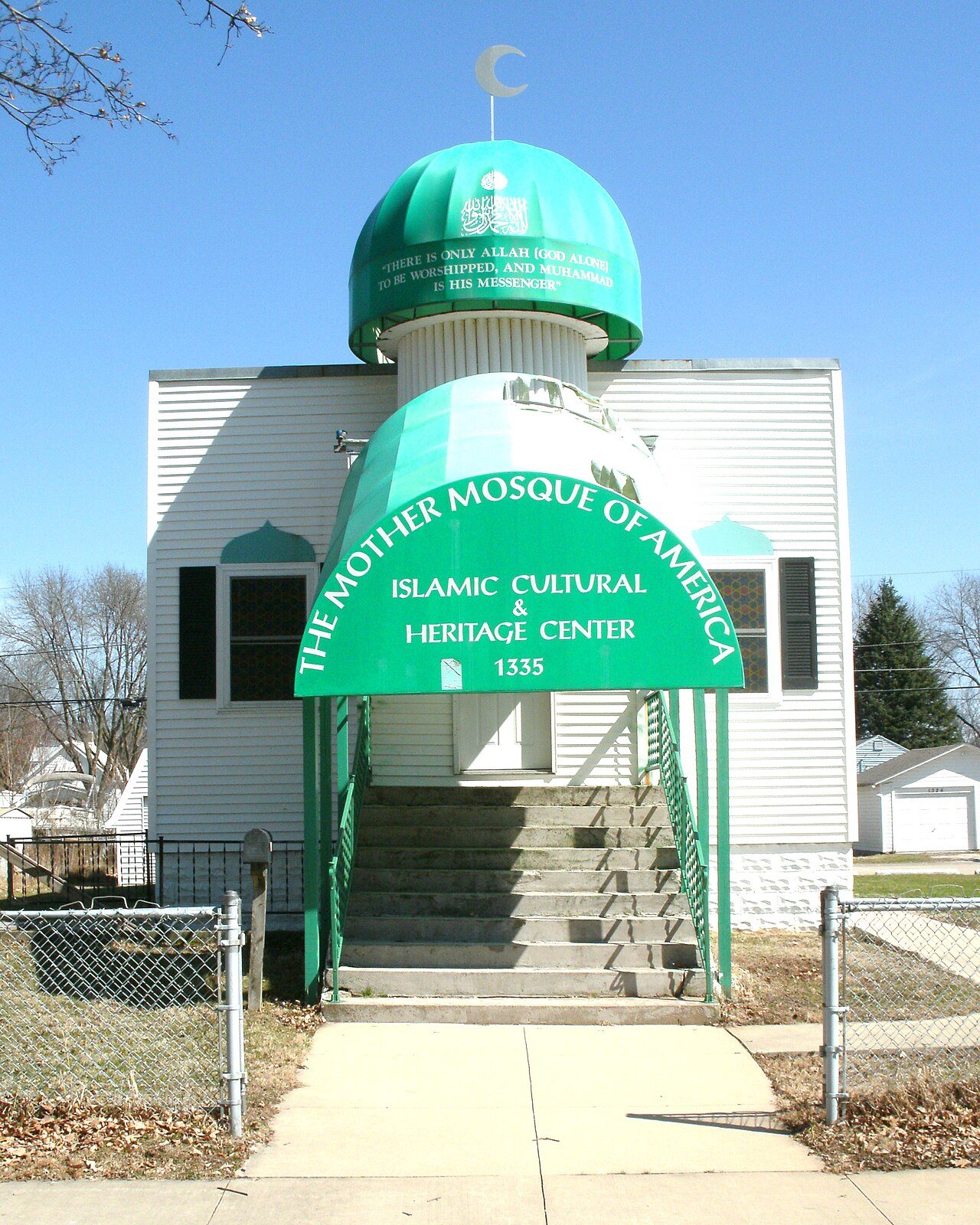
The Mother Mosque of America is a one-story, wood-frame building whose proportions recall a prairie schoolhouse. Completed in 1934, it was built with substantial labor from community members during the Great Depression. The National Park Service records an earlier rented gathering space used by the Rose of Fraternity Lodge in 1925. A permanent building was one stage in an existing community’s development.
By 1970 the congregation had outgrown it. The old building subsequently passed through other uses and deteriorated before the Islamic Council of Iowa bought and restored it in the early 1990s. Its listing on the National Register of Historic Places followed in 1996. Preservation is part of the achievement: a building can survive physically while its story still needs to be recovered and explained.
Use the building as a starting point
The Mother Mosque presents itself as an Islamic cultural and heritage center, with education for religious and secular audiences. Its website provides a route to arranging a visit. The street address is 1335 Ninth Street NW, Cedar Rapids; check the institution’s visitor information before making a journey rather than assuming a historic designation means unrestricted access.
When looking at its photographs, notice the ordinary scale. The story is about the resources families assembled and the institutions they maintained, not the size of a dome. Ask how the building’s congregational use differs from its role as a place where later visitors encounter that history.
Keep the people and periods distinct
Salih’s work belongs to Iowa City; the historic mosque belongs to Cedar Rapids. They are connected here through the state, not through a claim that they were one organization or one community project. One account follows workers and civic participation; the other follows construction, growth and preservation.
Read the wage-recovery figure in its 2019 context and the mosque through its sequence of uses. Together, these accounts offer more than a list of prominent names: they show what the work involved and where its traces can still be explored.
Follow the story
Explore the original reporting and organizational records:
Selected local stories, not a complete account of the state. Events and figures refer to the periods stated above. Check directly with organizations for current services.