

Helping newcomers settle through local refugee services
Language classes, transport, employment preparation, and the practical work of building a life in a new community.
A closer look at West Valley City’s mosque, its changing form and the community work behind the building.
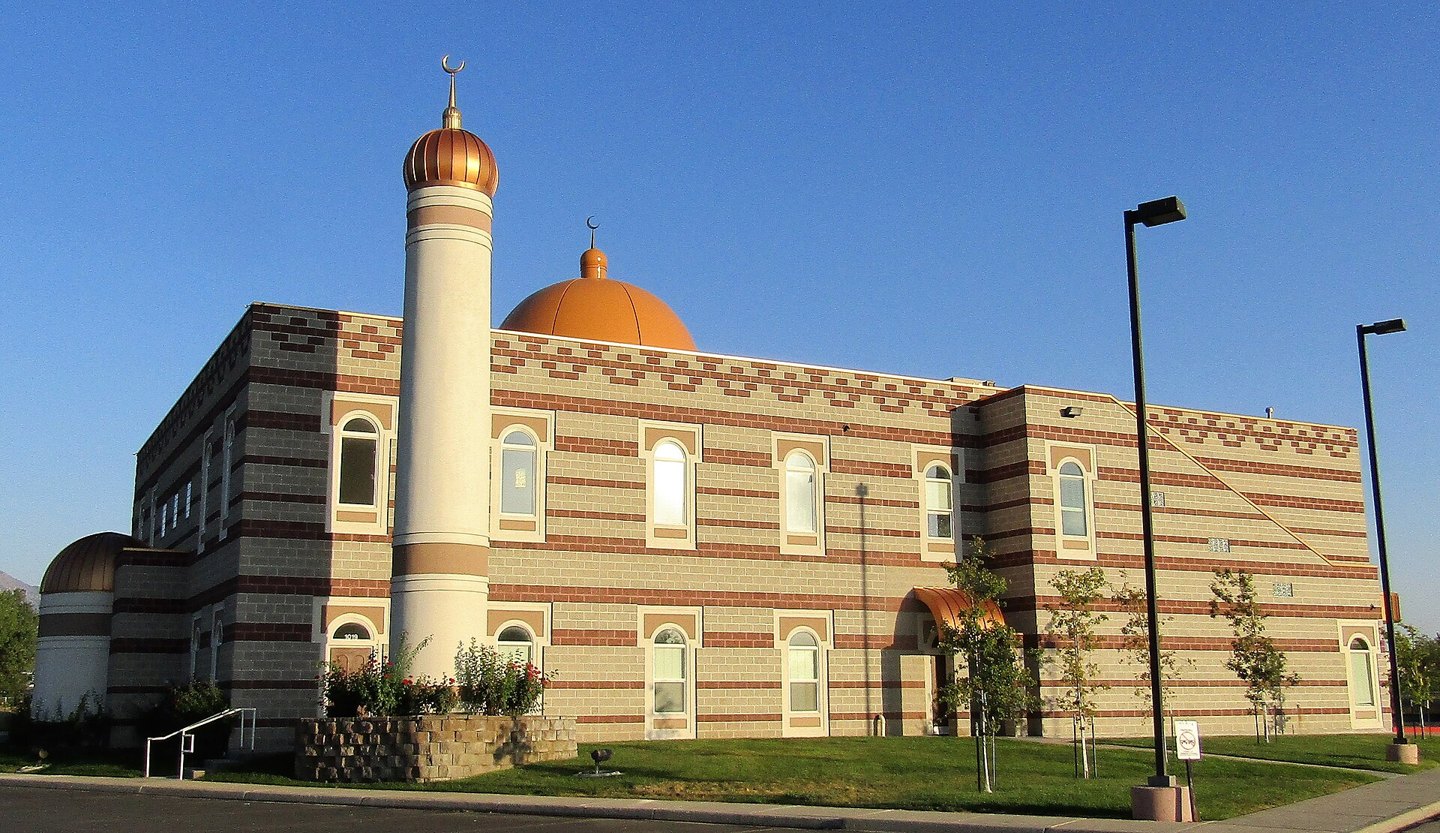
Khadeeja Islamic Center in West Valley City is a useful reminder that a recognizable landmark can develop in stages. A 2013 Salt Lake Tribune account follows architect Kimly Mangum and community members through the building's original design and later expansion. The historical photograph accompanying this article shows the exterior in September 2018, five years after that report.
The Tribune describes a practical initial request for prayer space rather than an elaborate monument. Mangum researched mosque architecture after receiving the brief. Its account dates the first structure to 1994 and additions to 2002.
The expansion changed more than capacity. The minaret was moved and enlarged, a second story was added and a gold-colored dome became part of the exterior. The result is a building whose present appearance cannot be understood from its first phase alone.
These are details from the 2013 reporting. They are not a current inventory of rooms or a confirmation of today's access arrangements.
Begin with the broad form of the building, then compare the dome and tower. Ask which parts draw attention at a distance and which help someone recognize an entrance. The distinction between a landmark's silhouette and its everyday use is a productive starting point for architectural discussion.
Keep the photograph's date attached to those observations. A 2018 exterior records one moment; it cannot show current interior arrangements, staffing or a later renovation. Nor does it illustrate every Muslim community institution in Utah.
Utah Muslim Heritage, a separate project associated with Al-Mustafa Foundation, describes collecting family photographs, documents and objects. Its record of a May 2025 exhibition in West Valley City offers a complementary way to explore local history: through personal materials rather than a building.
Khadeeja and Al-Mustafa are different institutions. Reading both makes the state's coverage richer without merging their histories.
For an in-person visit, use the congregation's current contact information and confirm arrangements with a host. For an online reading session, compare the dated newspaper account with the licensed photograph and the separate heritage project's records. Together they open questions about how communities preserve both shared places and family memories.
Language classes, transport, employment preparation, and the practical work of building a life in a new community.
 Culture
Five stories connect Black Muslim schools, campus organizing, an accredited college, scholarships, and classroom education.