
 Community
Muslims and everyday neighborhood life
Five documented ways Muslim institutions contribute to American neighborhoods through shared space, housing, civic learning, and environmental work.
Explore the weekend school at Masjid As-Sabur and find the right questions for a family’s first inquiry.
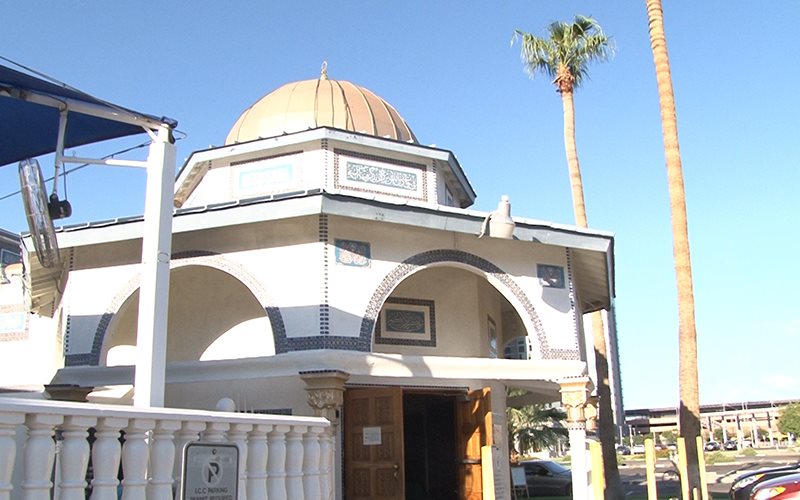
On Las Vegas's Historic Westside, Nisaa's Academy connects a teacher's memory with an ongoing educational program. Al-Maun Neighborly Needs describes it as a weekend school at Masjid As-Sabur where children learn Arabic letters and Qur'an reading alongside manners and care for others. Its name remembers Nisaa Seifullah, the organization's co-founder and longtime teacher.
Al-Maun's memorial dates its founding by Nisaa and Imam Fateen to 2003. It describes practical support for neighbors and the repeated organizational work that kept assistance going. The academy represents one part of that broader local history: time spent teaching children.
The school's own page describes learning as a progression from recognizing letters to reading words and passages. It also emphasizes adab, including patience and kindness. This is the provider's description of its approach, not an independent inspection or an assessment of individual children's progress.
Begin with the Nisaa's Academy page and its contact route. Ask about the current timetable, age groups, placement for different reading levels and the enrollment process. A child who is new to Arabic and a child already reading independently may need different starting points.
The page states that cost should not prevent attendance. Ask the organization what that means for your family's arrangements rather than assuming a particular fee schedule or an automatic place. Confirm pickup, attendance and parent-contact procedures directly with the school.
The academy page includes photographs described as moments from its history, including Nisaa's own teaching years. They help convey the setting but should not be used to identify today's staff or enrollment. This guide links to the source rather than republishing photographs of children without established reuse permission.
For an adult interested in helping, ask what support the academy requests and which preparation or checks apply. Teaching, administration and material support are different contributions.
Our separate Nevada story follows Nisaa's wider community legacy. The academy adds a present-day route into that history: an institution where her name accompanies a specific educational task. The useful next step is a direct conversation with the people organizing it now.
CommunityFive documented ways Muslim institutions contribute to American neighborhoods through shared space, housing, civic learning, and environmental work.