 Community
Muslims and everyday neighborhood life
Five documented ways Muslim institutions contribute to American neighborhoods through shared space, housing, civic learning, and environmental work.
Explore a Qur’an bag, a writing board and a university teaching display through the Spencer Museum’s online collection.
At the University of Kansas, an archived teaching display offers an accessible route into African Islamic art. The Spencer Museum of Art's 2019 selection for Jessica Gerschultz's Islamic Art & Architecture in Africa course brought together objects with different materials, uses and histories. Although the display has ended, its checklist still connects readers with individual collection records.
The exhibition record dates the display to September 17–October 6, 2019, in the museum's Brosseau Center for Learning. Its list includes works by Yelimane Fall and Mor Gueye, a student's writing board, a Qur'an and a leather bag made to carry one.
Treat that list as a route for exploration, not as a claim that every object is currently in the gallery. It also includes a broader range of African material culture. An item's appearance on a course checklist does not by itself establish the beliefs of its maker.
The museum records a gafaka, or leather Qur'an bag, made in Kano, Nigeria, in 1979 by an unrecorded Hausa-Fulani artist. Its materials and techniques include leather, braiding, dyeing and embroidery. Professor Beverly Mack donated it; the accession number is 2011.0156.01.
Those fields help separate place, date, material and collecting history. The Kansas connection is the work of collecting and teaching at the university, not a claim that the bag was made locally.
The catalog marked the object as not on display when checked on November 14, 2026. It also directs image-reproduction requests to the museum. Being able to view a collection image online does not automatically grant permission to reuse it.
Compare the bag with the writing board on the checklist. One invites questions about carrying and protecting a text; the other about the physical tools of learning. Look first at shape, surface and cataloged materials, then distinguish your observations from what the record explicitly establishes.
If you plan a visit, contact the museum about current displays rather than building an itinerary around an old exhibition page. You can still use the online records for a class discussion or independent reading. Alongside Lawrence's separate mosque history, this university collection shows another local setting in which people encounter Islamic art and ideas.
CommunityFive documented ways Muslim institutions contribute to American neighborhoods through shared space, housing, civic learning, and environmental work.
 Art
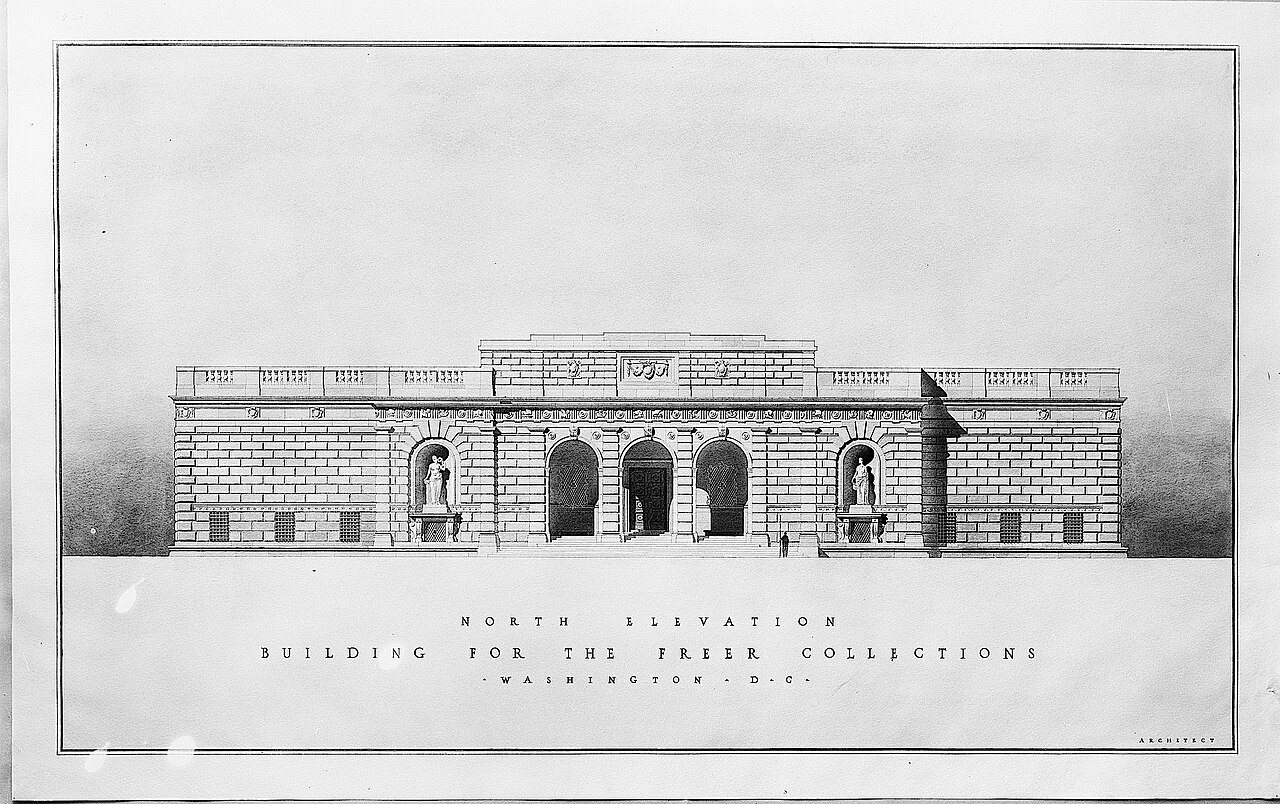
Charles Lang Freer, the museum's 1923 opening, and the journals that helped establish Islamic art scholarship in the United States.