
 Culture
How Muslim Americans built places and pathways for learning
Five stories connect Black Muslim schools, campus organizing, an accredited college, scholarships, and classroom education.
Scholarships, grants, and professional pathways focus support on law, policy, media, and film.
A scholarship can do more than reduce a tuition bill. Its choice of eligible fields can reveal a theory about which professions need more participation. The Islamic Scholarship Fund, or ISF, directs support toward fields including law, public policy, media, and film. Its stated aim is to help Muslim students and people active in Muslim communities enter work that shapes public understanding and public decisions.
That makes ISF a distinctive subject within American educational history. It does not operate a university or prescribe a single curriculum. It works through support for people studying and developing careers across institutions.
The fund’s program and impact material connects its selected fields with representation and participation. Lawyers help frame claims and navigate institutions. Policy professionals work on public decisions. Journalists and filmmakers help determine which experiences become visible to an audience.
A media applicant and a law applicant may study in different buildings and prepare different kinds of work, yet both encounter a question about public voice: whose experience is understood when an institution makes a decision or tells a story? The fund connects those otherwise separate educational paths.
The choice of fields is nevertheless important. A general scholarship asks who should receive help. A field-specific scholarship also asks where that help should be directed. ISF’s answer places public-facing professions at the center of its educational strategy.
The media scholarship page includes areas such as communications and writing. It describes an application involving academic records, recommendations, essays, and work samples. The materials ask applicants to show both educational preparation and an interest in the field.
Work samples are especially revealing. They give an applicant a way to present something already made: a piece of reporting, writing, or other relevant work. A transcript and a sample answer different questions. One records academic performance; the other allows a reader to examine how an applicant communicates.
For a student exploring the program, the practical task is to identify the relevant scholarship and read its current requirements directly. The fund is not an all-majors scholarship directory. Understanding its focus early can prevent an applicant from spending time on a program that does not fit the proposed course of study.
The law scholarship program emphasizes public-interest legal careers. Its published eligibility includes several stages of the path into and through law school. That is a different kind of intervention from offering only an award to a graduating high-school student.
A legal career involves successive transitions: deciding to apply, entering a degree, developing interests, and seeking professional experience. Supporting students at more than one point recognizes that access is not settled by admission alone.
The public-interest focus gives the law program a particular direction. An applicant can use that emphasis to explain how their course of study connects with the people and institutions they hope to serve. A proposed career becomes part of the educational question, alongside grades and admission.
The connection to Muslim Nook’s civil-rights collection is useful. Court cases such as Samantha Elauf’s hiring dispute depended on legal institutions and professional work. Scholarship programs address a different part of that landscape: the preparation and support of people who may later work within it.
ISF’s pages describe eligibility in terms of being Muslim or actively involved in a Muslim community, alongside academic, residency, and field requirements. That wording should not be reduced to a guess about an applicant’s name or appearance. The organization defines its own application criteria.
The pages reviewed for this article did not present every eligibility detail consistently. In particular, some main eligibility sections and frequently asked questions differed in their treatment of immigration-status categories. An applicant should ask the fund to resolve such a discrepancy before relying on either version.
Application materials take time to assemble. Recommendations depend on other people, and a work sample may need careful selection. Reading the relevant program page before drafting an essay helps an applicant connect their strongest evidence to the actual purpose of the award.
For a donor, researcher, or student, three kinds of evidence answer different questions. Program rules show who may apply. Award records show support actually distributed. Follow-up research can show what recipients later did. Moving from the first category to the third without evidence is an easy way to overstate impact.
ISF’s place in this collection rests on a clear educational contribution: organizing targeted financial and professional support around Muslim participation in selected public-facing careers. The fund’s own impact claims remain claims attributed to the organization unless independently established.
That model contrasts with Zaytuna College, which builds a degree program, and campus student associations, which build networks among students. Together, these stories show education operating through institutions, relationships, and resources. Return to the education collection to compare those approaches.
CultureFive stories connect Black Muslim schools, campus organizing, an accredited college, scholarships, and classroom education.
 Culture
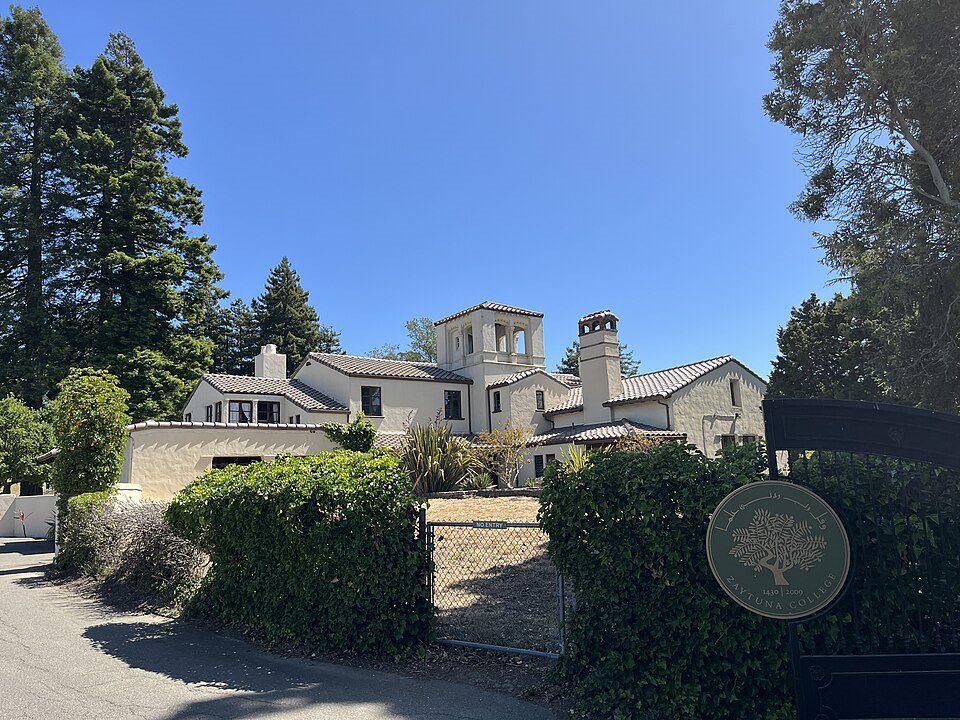
A Berkeley college brought an explicitly Islamic liberal-arts curriculum into the American system of institutional accreditation.
HistoryThe student networks and Indiana institution behind the emergence of ISNA.