
 Community
Muslims and everyday neighborhood life
Five documented ways Muslim institutions contribute to American neighborhoods through shared space, housing, civic learning, and environmental work.
Use the Loop’s Downtown Islamic Center and a regional mosque directory to plan a realistic Chicago visit.
Chicago’s Muslim institutions offer several ways to read the city: a center in the Loop, a long-established Ahmadi congregation on the South Side, and an organization connecting art, health and neighborhood work. These places do different jobs. Visiting them with that distinction in mind produces a richer picture than a single list of mosques.
A first trip should choose one or two areas. Downtown access is convenient for many visitors, while South Side organizations deserve time in their own setting. The wider metropolitan directory also includes suburban centers, which may be better suited to a separate day.
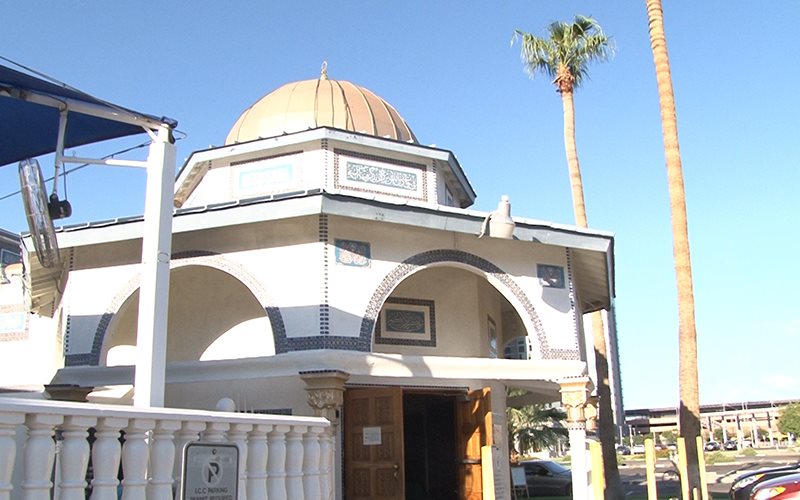
The Downtown Islamic Center traces its work to 1976. Its address at 231 South State Street places a Muslim community institution within the Loop’s everyday movement of workers, students and visitors. This is a different urban setting from a large suburban campus.
The center publishes children’s and adult programming alongside its prayer information. Its educational activities and arranged group visits make it a useful place to ask how a downtown institution serves people whose relationship to the neighborhood may be residential, professional or temporary.
Its visitor page describes visits for schools, universities and community groups, including opportunities to observe and ask questions. For an arranged conversation, choose a specific interest: the center’s history, education, or the practical work of serving a downtown community. That focus gives a host something concrete to discuss.
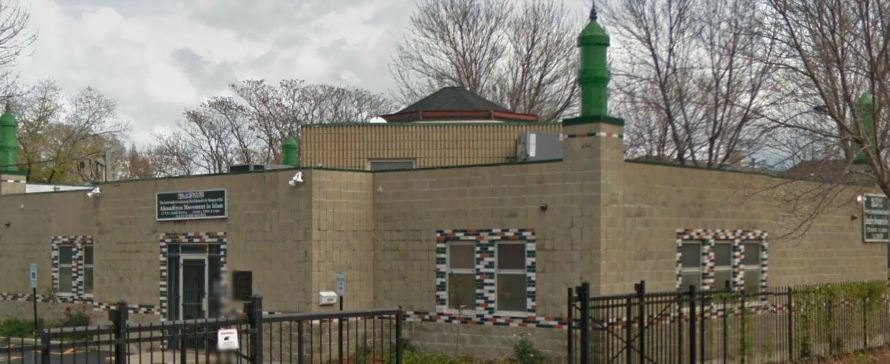
The Ahmadiyya Muslim Community’s national history dates its American establishment to 1920 and identifies Chicago’s Al-Sadiq Mosque with the early 1920s. This provides an important early institutional reference point without requiring an unsupported claim about a single “first” American mosque.
The current As-Sadiq Mosque page lists 4448 South Wabash Avenue and identifies the institution as the Chicago congregation of the Ahmadiyya Muslim Community. It welcomes visitors and describes daily prayer, classes and community programs.
Use the congregation’s own name and affiliation when discussing its history. Muslim Nook’s role is to document American institutions and their self-described communities, not adjudicate religious boundaries. An institutional visit can explore how a congregation preserves its records, welcomes younger members and relates to its neighborhood.
The Inner-City Muslim Action Network’s Chicago programs include a health center, organizing and advocacy, Green ReEntry, and arts and culture. This combination broadens a visitor’s understanding of what a Muslim-rooted community organization can do.
Its Arts & Culture program includes the Beloved Community Ceramic Studio. The studio curriculum connects ceramic practice with community organizing and behavioral-health approaches. The program also presents artists and maintains an artist roster.
For an art-minded reader, that is a distinctive Chicago starting point. Instead of assuming Islamic art means only historical ornament, look at how contemporary artists work through material, participation and neighborhood relationships. A ceramic studio can be a place to learn a technique and a place to form connections.
IMAN’s event calendar is the appropriate place to find an actual public opportunity. A program’s existence does not make every studio session a drop-in attraction. Select an advertised event and follow its registration information.
Green ReEntry combines training and support for participants, with services including case management, behavioral-health support and access to other IMAN programs. Its account also describes housing as part of the work.
These programs connect the city’s Muslim community institutions with pathways into skilled work, stable housing and professional networks. A profile of local business can ask who receives training and how people gain opportunities, alongside more familiar stories about founders and shops.
Visitors should approach this as a service program, not a sightseeing stop. Public presentations or an agreed interview offer a better way to learn without disrupting participants.
The Council of Islamic Organizations of Greater Chicago directory can help identify further institutions across the region. Use it to expand a specific interest rather than assemble an impossible one-day route.
A downtown day might center on DIC. A history day could include an arranged As-Sadiq visit. An arts day might follow a public IMAN event. Chicago’s contribution becomes clearer when these institutions are understood through their actual work: gathering, teaching, making art, caring for neighbors and building opportunities.
CommunityFive documented ways Muslim institutions contribute to American neighborhoods through shared space, housing, civic learning, and environmental work.
 History
A practical starting point for finding museum objects, oral histories, and community archives without confusing access with permission.
Ask about the full route, communication support and program arrangements, using concrete information from MUHSEN and local visitor pages.