
 Art
How to Look at Islamic Geometric Patterns in a Museum
Learn to follow repetition, symmetry, borders, and materials without reducing every pattern to a single meaning.
Use Worcester’s documented gallery refresh to explore an Iranian tile, book painting, and connections across Asian art.
A museum’s arrangement can change the questions a visitor asks. Worcester Art Museum’s 2024 announcement of a refresh to its West, South, and Southeast Asian gallery emphasized interactions across cultures. That framing offers a useful way to encounter Islamic art within a broader Asian collection.
One announced acquisition was a tile made by ‘Ali Muhammad Isfahani in Tehran in 1885. The museum connects its scene with a much earlier meeting involving Shah ‘Abbas I and Vali Muhammad Khan and with a mural at the Chehel Sotoun Palace. The distinction between the nineteenth-century object and the seventeenth-century event it depicts is essential. Refresh announcement
When a work represents an earlier event, its label may contain several dates. Record them under different headings in your notes. One is the date of manufacture. Another belongs to the represented event. A third may concern a model or source image.
That simple practice makes historical looking more precise. It also prompts a question worth pursuing through the museum’s account. Why might a later maker or patron choose to revisit an earlier political or artistic moment?
The museum interprets the tile in relation to a Safavid revival during the Qajar period. Treat that as a documented curatorial reading. A viewer can then examine how the image presents the past, including the arrangement of figures, the use of color, and the treatment of architectural space.
Worcester’s broader Asian art presentation encompasses China, Japan, India, Southeast Asia, and the Islamic world. A visitor can therefore compare works across the museum’s categories while preserving the particulars of each object. Asian art overview
Choose a visible feature such as a border, a flower, or a painted architectural setting. Find it in two works, then read their materials, dates, and places. Similarity is a starting point for inquiry. It does not by itself prove a direct historical influence.
An object can travel, an artist can move, and a design can circulate through other media, but each proposed connection needs evidence. Keep your first observation modest and use the catalog to learn whether scholarship supports a larger claim.
The museum’s educational discussion of Islamic art explains the breadth of a category shaped by many communities and regional traditions. It helps readers distinguish a museum’s art-historical classification from a statement about an individual maker’s religious identity. Educational introduction
Another museum resource introduces calligraphy, geometry, plant ornament, and figures as themes for looking. Use such themes as practical tools, while allowing the individual work to complicate them. A page may combine several kinds of ornament, and an object’s function may matter as much as its design. Looking themes
For a family, ask each person to describe one feature before reading the label aloud. Then ask what the label changed about the observation. This creates a shared conversation without requiring everyone to arrive with the same historical knowledge.
The 2024 refresh announcement records a moment in the museum’s development. It does not guarantee that every named work remains on display in the same arrangement today. Check current gallery information and ask about a specific object if it is the main reason for traveling.
Worcester also publishes study-room guidance for prints, drawings, and photographs, including a route for questions concerning Asian works on paper. A research appointment is a separate arrangement from ordinary admission. Explain the object or topic you want to study and follow the institution’s booking conditions. Study-room guidance
Prepare a short list of questions rather than an exhaustive itinerary. One could concern a work’s date, another its material, and another its later interpretation. At the end of the visit, choose the question that has become more specific.
A gallery organized around connections works best when visitors hold both scales in view. The larger pattern makes exchange visible, while a named maker, dated tile, or individual page keeps the story grounded in the actual work.
Two further works announced in the 2024 gallery refresh make a useful pair. The Killing of the Camel is a folio from a Kalila wa Dimna manuscript associated with Abu'l Ma'ali Nasr Allah ibn Munshi, made in Iran in 1333. Its materials include opaque watercolor, ink, and gold on paper. The museum also introduced an eighteenth-century northern Indian writing cabinet with a drop-leaf front and painted floral doors.
One object presents a story on a portable sheet; the other creates a place to store and organize writing materials. Their juxtaposition suggests a route through the gallery centered on reading and writing as activities. Compare the tiny painted page with the cabinet's compartments and working surface rather than trying to reduce them to a single national style. The installation announcement gives their identities and intended inclusion; the current gallery page remains the place to check what is available during a particular visit. Source
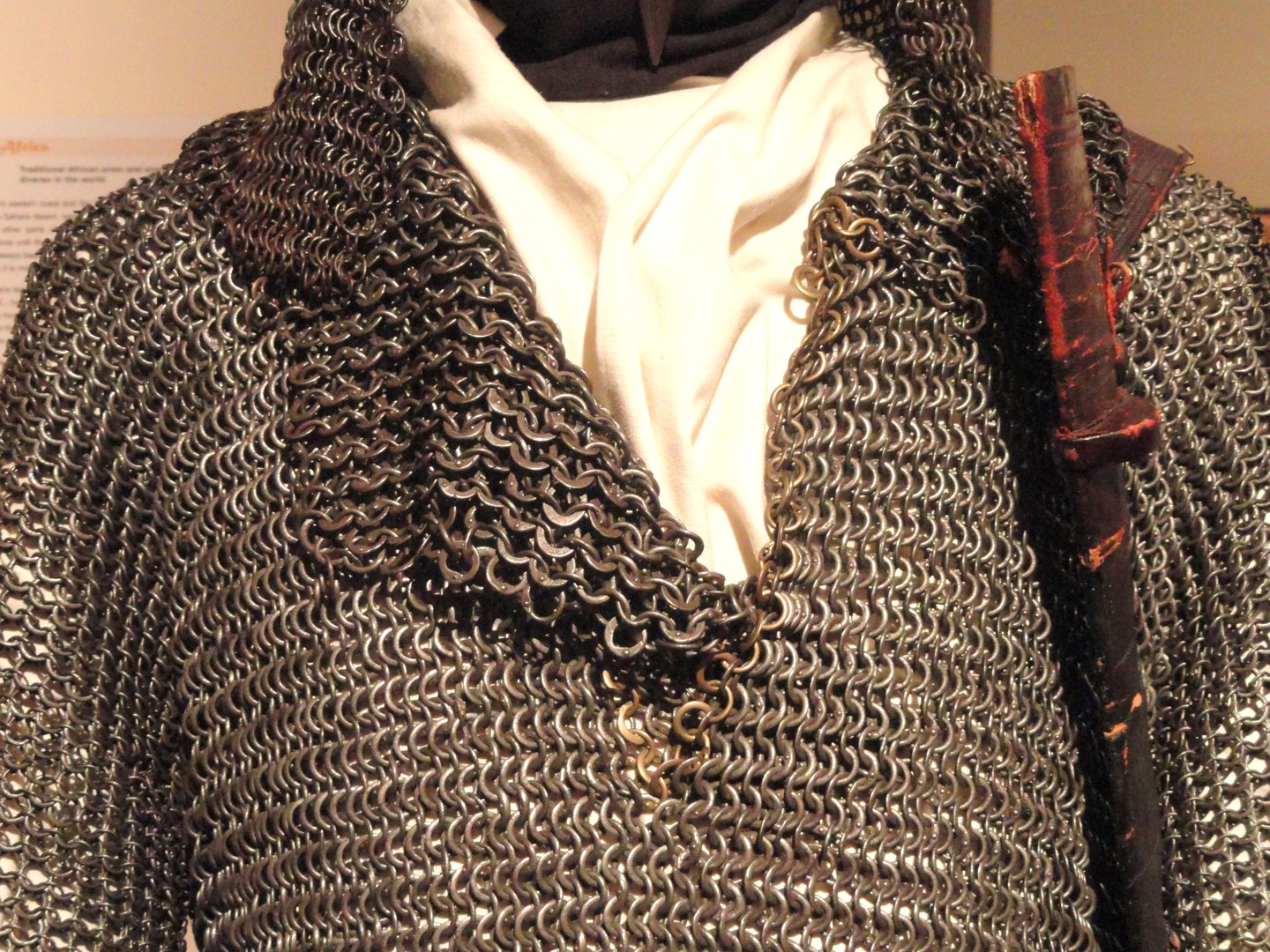
Worcester’s holdings also invite a comparison between painted ornament and the construction of armor. The museum acquired the Higgins Armory collection in 2014; its new arms and armor galleries opened on November 22, 2025. These are separate developments from the Asian gallery refresh. Collection history · New galleries
The photograph here records a mail coat at the former Higgins Armory Museum in 2011. Its closely interlinked rings offer a different kind of pattern to examine: a structure assembled from small repeated parts, rather than ornament painted onto a surface. This historic installation photograph does not establish that the same coat is currently on display. Use the museum’s collection and visitor information to plan a present-day visit.
ArtLearn to follow repetition, symmetry, borders, and materials without reducing every pattern to a single meaning.
 Art
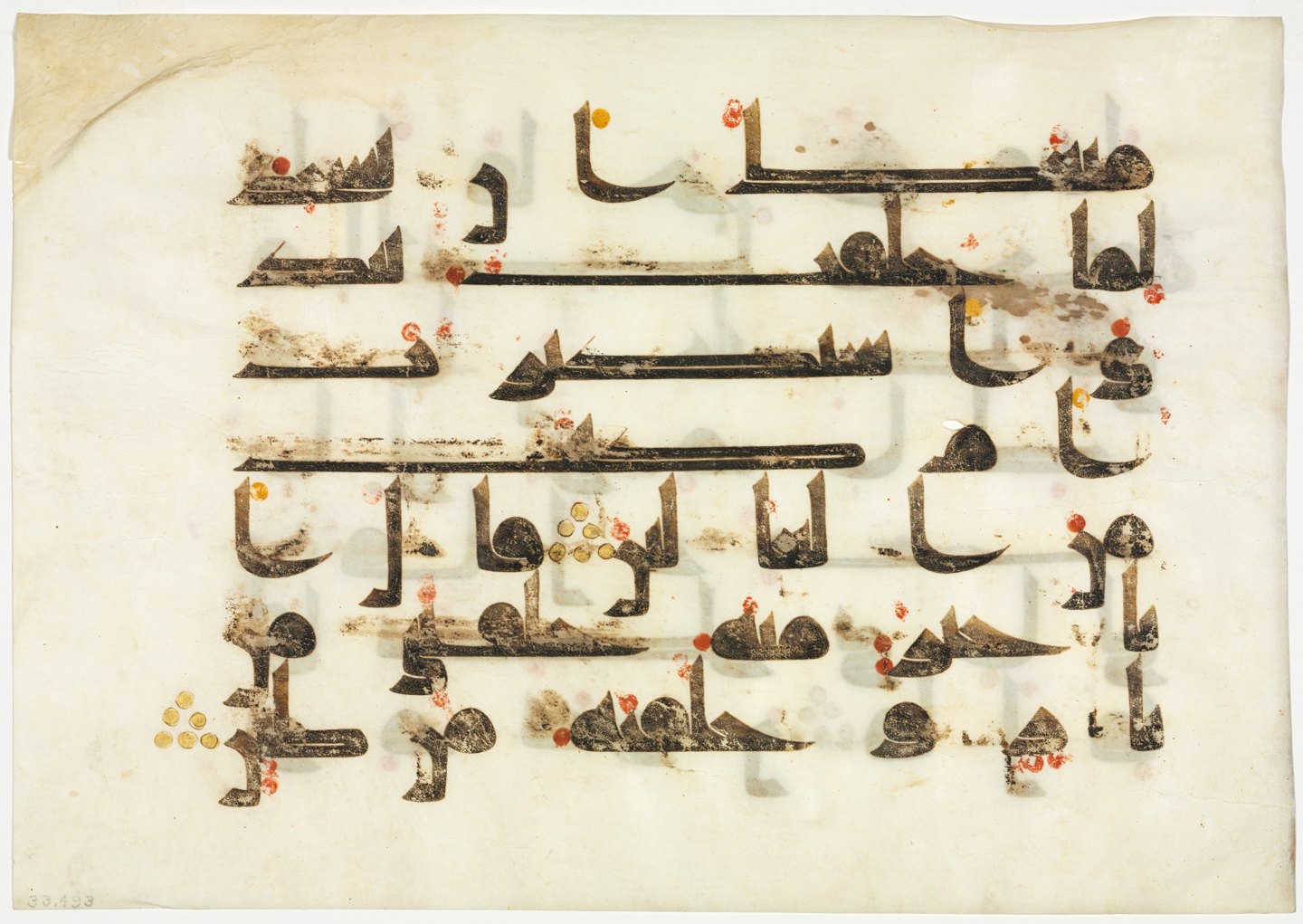
A close-looking guide to a Qur’an folio and luster ceramics, using Cleveland’s public collection records.
 Art
Explore manuscript painting, a Samanid bowl, and object histories at Washington's National Museum of Asian Art, with practical planning links.