
 Art
How to Explore Islamic Art in Cleveland’s Open Collection
A close-looking guide to a Qur’an folio and luster ceramics, using Cleveland’s public collection records.
Explore the MFAH through book arts, blue-and-white ceramics, and the movement of materials and designs.
At the Museum of Fine Arts, Houston, a blue-and-white ceramic can lead into a conversation about travel. A manuscript can lead toward the people who commissioned, wrote, painted, and preserved books. A contemporary carpet can make a familiar creature seem newly strange. These are productive routes through the Art of the Islamic Worlds galleries.
The museum locates the galleries in its Law Building and organizes the presentation into six areas, including book arts and blue-and-white exchange between China and Iran. Its overview describes holdings supplemented by extended loans from the Hossein Afshar Collection. Check the current visitor page for access and ticket arrangements before traveling. Gallery information
Start with a material you recognize, perhaps clay or metal. Look at how the label describes its processing. A material name can reveal a very different object from the one suggested by its color alone.
The collection overview highlights a bronze feline-shaped incense burner from twelfth-century Iran, an illuminated fourteenth-century Qur’an from Morocco, and an early sixteenth-century ceramic tondino from Iznik. These examples offer three different ways to think about function, surface, and skilled labor. Their inclusion in the collection does not establish that each is on display during every visit. Collection overview
With an animal-shaped vessel, consider how the animal form accommodates the practical object. With a manuscript, ask how writing and ornament divide the page. With a ceramic, locate its border and center and examine whether the design changes between them. The comparison keeps the visit anchored in things you can observe.
The museum’s essay on dragons introduces examples across media, including Faig Ahmed’s twenty-first-century Dragons of Karabakh carpet and a seventeenth-century Iranian huqqa base. The discussion connects the creatures to different historical traditions and visual exchanges.
A dragon is a particularly effective subject for a mixed-age group because everyone can describe a feature before learning its background. Count limbs or curves, identify the direction of movement, and consider the creature’s relationship to the object around it. Then use the museum’s interpretation to test those first impressions. Dragon essay
Avoid assuming that every similar creature carries one meaning. A shared motif can be adapted to different settings. The question worth following is what the maker did with the form in this specific work.
The MFAH describes participation in the Islamic Arts Society’s annual festival as part of its community engagement. That relationship provides a useful bridge between historical collections and current local art making. Check each organization’s current calendar rather than treating an earlier event announcement as a standing invitation. Community programs
If you are planning two outings, make them complementary. At the museum, record a process or material you want to understand. At a demonstration or workshop, ask how contemporary practitioners use tools, plan patterns, or correct mistakes. Keep the artist’s own explanation attached to their name and work.
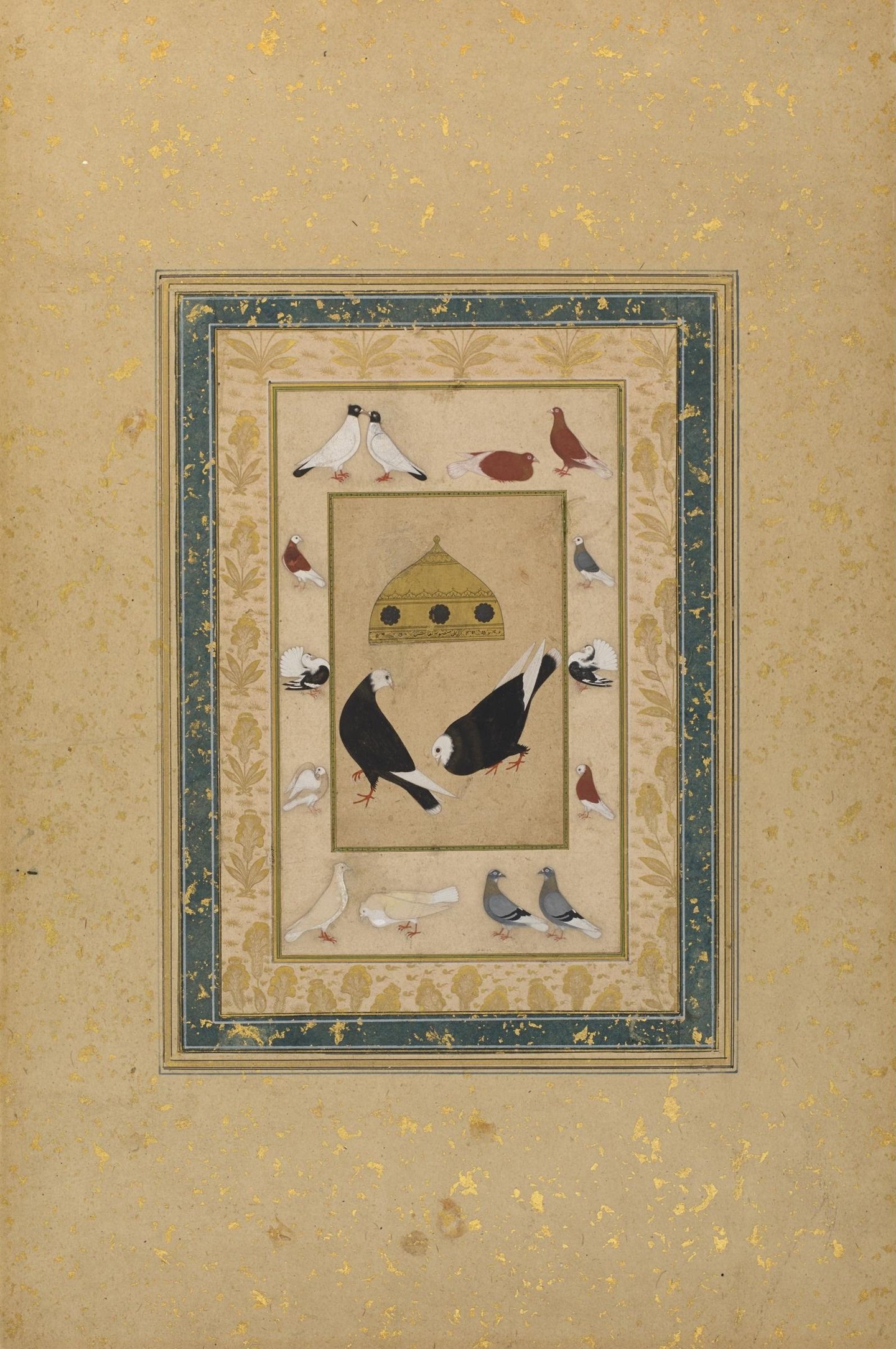
Pigeons around a Dovecote, accession 2014.230.A, offers another way to study the collection online. The MFAH’s 2013–2014 annual report identifies a Mughal album leaf with an inscription naming the illuminator Mansur. Its painted image measures 18.7 by 11.3 centimeters within a much larger sheet, 44.8 by 29.8 centimeters. The difference matters: an enlarged screen image can make a small painting feel monumental. Museum acquisition account, printed page 16
Look at the two large dark pigeons below the golden dovecote, then the smaller pairs arranged around them. The broad borders are part of the page’s presentation, not empty space to crop away. Compare the birds’ positions and plumage before following the surrounding floral decoration.
The dating needs care. The annual report gives about 1650–60, while the Commons reproduction record describes the first quarter of the seventeenth century. We retain the broader seventeenth-century description here rather than present those records as agreement. The image is a collection study resource; it does not establish current gallery display.
A manageable first visit might concentrate on three objects in different media. Choose one because its function is clear, one because it is difficult to interpret, and one because a detail attracts you. This gives each visitor a reason to return to the label with a specific question.
Take notes on the date, place, material, and accession number. If photographs are permitted, capture the label as well as the artwork. An uncropped overall photograph is often more useful for later research than a dramatic detail without context.
For accessibility, parking, and admission, rely on the museum’s current planning pages. Displays and special installations change. Historic exhibition essays remain valuable background even when their featured works have rotated out.
For a complementary local encounter, read about Houston’s Islamic Arts Society and its documented museum partnerships.
The museum's archived Sea of Ink, Forest of Pens exhibition provides a more focused route into its book arts. It ran from June 2025 to June 2026, so its online account is background research rather than a promise of a current display. One featured Qur'an was signed and dated by Mir Abd al-Karim Muhammad Sadiq al-Husayni al-Yazdi in Iran in 1844–45. The exhibition identified it as an example of lavish manuscript production within a much longer history of copying and illumination.
A contrasting work was Haji Noor Deen's Ayat al-Kursi Scroll of 2015. The museum describes its Sini Arabic script as bringing the discipline of the reed pen into contact with the flowing qualities of Chinese brush calligraphy. These two named works make an important point tangible: calligraphy is not one unchanging look. Compare the scale of a scroll with that of a bound book, then consider how each format asks the viewer to approach the written text. The exhibition archive offers a starting point for that comparison even after the objects rotate. Source
ArtA close-looking guide to a Qur’an folio and luster ceramics, using Cleveland’s public collection records.
 Art
Explore rock crystal, metalwork, manuscripts, and textiles through the Dallas Museum of Art’s Keir Collection records.
 Art
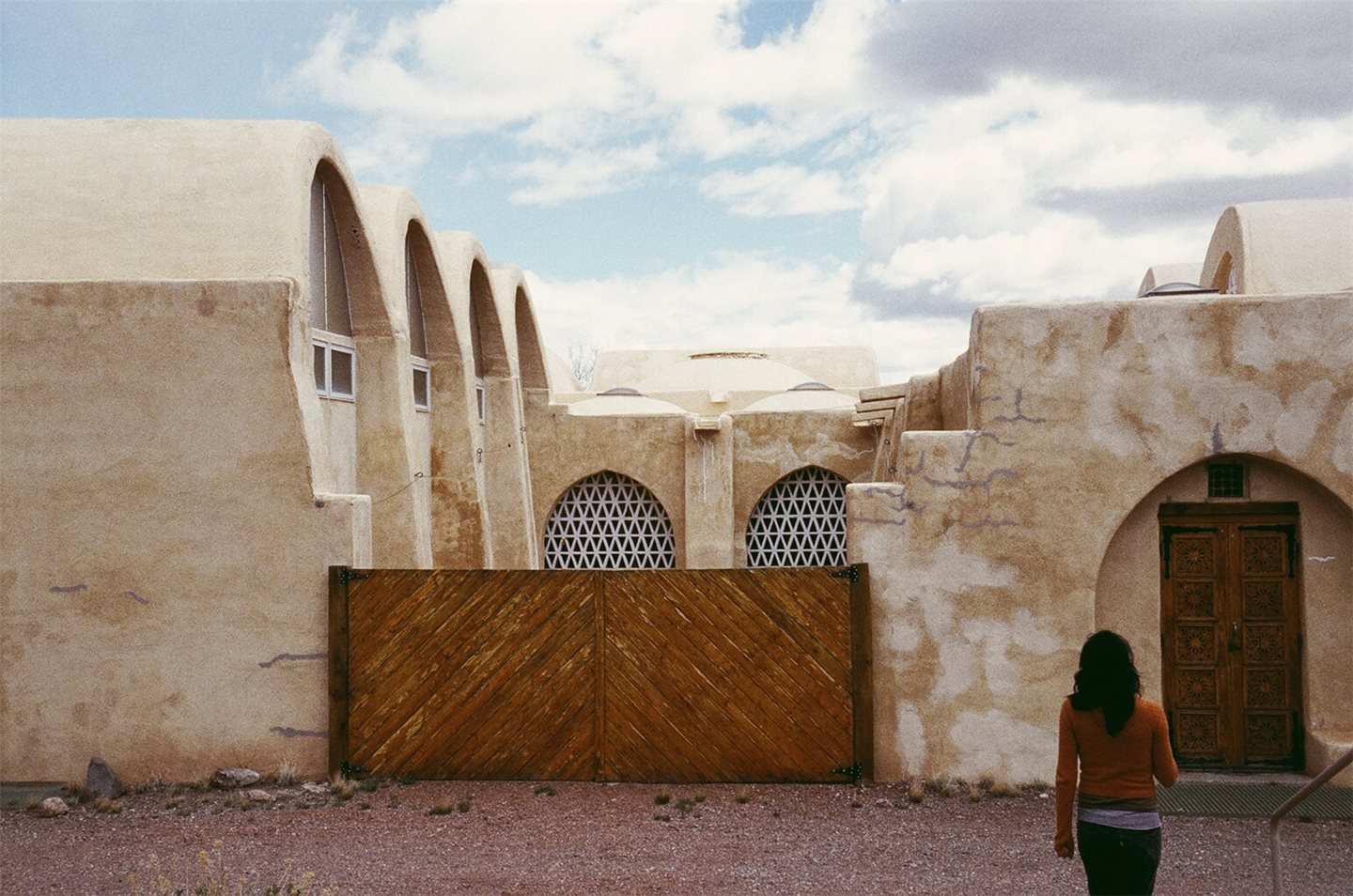
Hassan Fathy’s New Mexico mosque connects Muslim community-building, earthen construction, and a changing vision for life in the American Southwest.